


Ambien (Zolpidem) Online Sleep Care
When difficulty falling asleep begins to affect your nights—and the way you feel the next day—the right treatment starts with understanding what is interfering with your sleep.
At SleepMed, care begins with a professional sleep evaluation, not a prescription request. A licensed medical provider reviews your symptoms, sleep patterns, health history, current medications, and other factors that may be contributing to insomnia. Ambien (zolpidem) may be considered when it is clinically appropriate and prescribing requirements are met.
Better sleep starts with understanding the reason you're not sleeping.

Table of Contents
 When Sleep Stops Coming Naturally
- What Kind of Insomnia Are You Experiencing?
- One Difficult Week Is Not the Same as Chronic Insomnia
- What Is Ambien?
- Buying Ambien Online: What Patients With Insomnia Should Know
- Why Ambien May Be Considered for Insomnia
- What Does Ambien Feel Like?
- Ambien Dosage & How It Is Taken
- The Night Doesn't End When You Take the Tablet
- Taking Ambien Safely
- Important Ambien Safety Information
- Possible Side Effects
- When Ambien May Not Be the Right Answer
- What Ambien Cannot Fix
- Medication Isn't the Only Insomnia Treatment
- What If Ambien Doesn't Work?
- The SleepMed Difference: Looking Beyond the Sleepless Night
- Does Insomnia Require a Sleep Study?
- Sleep Medicine Leadership Behind the Approach
- Sleep Is Something SleepMed Has Spent Decades Measuring
- From Sleep Data to Individual Care
- Why SleepMed?
- A More Personal Online Evaluation
- How Online Sleep Treatment Works at SleepMed
- Can Ambien Be Prescribed Online?
- Our Clinical Standard
- Frequently Asked Questions About Ambien (Zolpidem)
- Medical Review & Editorial Standards
- Medical References
- Ready to Understand Your Sleep?
When Sleep Stops Coming Naturally
There is a difference between having a bad night and beginning to worry about bedtime.
Maybe falling asleep now takes an hour—or three. Maybe you fall asleep easily but find yourself awake again in the middle of the night. Maybe you've started looking at the clock and calculating how many hours remain before morning.
And after enough nights like that, the problem doesn't always stay in the bedroom.
Concentration suffers. Mornings become harder. Work feels heavier. You may start changing your evening around the possibility that tonight will be another difficult night.
That is when insomnia deserves more than another sleep tip.
It deserves an explanation.
At SleepMed, treatment should begin by understanding what is interfering with sleep, how long it has been happening, what you have already tried, and whether another sleep or medical problem may be contributing.
Ambien (zolpidem) may be one treatment option for appropriately selected patients—but the prescription should never be the starting point.
This is substantially stronger emotionally than immediately explaining telehealth.
What Kind of Insomnia Are You Experiencing?
Insomnia Doesn't Look the Same for Everyone
“I can't sleep” can describe several very different nights.
Trouble Falling Asleep
You go to bed tired, but sleep simply doesn't arrive.
Minutes become hours. Sometimes the harder you try to sleep, the more awake you feel.
Trouble Staying Asleep
Sleep begins normally, but repeated awakenings break the night into fragments.
Waking Too Early
You wake hours before you intended to—and cannot return to sleep.
Sleep That Doesn't Feel Restorative
Sometimes the complaint is less about the clock and more about how sleep feels afterward.
These patterns can overlap, and they do not automatically point to the same cause or treatment.
That is why “insomnia” is the beginning of the clinical conversation—not the end of the diagnosis.

One Difficult Week Is Not the Same as Chronic Insomnia
Insomnia can be temporary.
Stress, travel, illness, grief, schedule changes, or an unfamiliar environment can disrupt sleep for a period of time.
But when sleep difficulty becomes persistent, clinicians start asking different questions.
How often does it happen?
How long has it been happening?
Is there adequate opportunity to sleep?
What happens during the day?
Has worrying about sleep itself become part of the problem?
Could another sleep disorder, medication, medical condition, or behavioral pattern be contributing?
For chronic insomnia, professional guidelines emphasize cognitive behavioral therapy for insomnia (CBT-I) as first-line treatment rather than treating medication as the automatic long-term answer. The American College of Physicians' insomnia guidance recommends CBT-I as initial treatment for chronic insomnia.
What Is Ambien?
Ambien is the brand name for zolpidem tartrate, a prescription sedative-hypnotic.
It acts primarily through GABA-related signaling in the brain, producing a sedative effect that can make it easier to initiate sleep.
But there is an important distinction:
Ambien can help produce sleep. It does not necessarily remove the reason insomnia developed.
That is why medication can be useful for some patients without being the complete answer for every patient.
The FDA-approved immediate-release Ambien formulation is indicated for the short-term treatment of insomnia characterized by difficulty with sleep initiation. Full indications, dosing, contraindications, warnings, and precautions are available in the FDA-approved Ambien prescribing information.

Buying Ambien Online: What Patients With Insomnia Should Know
When sleepless nights become a routine, finding relief can feel urgent. Searching for Ambien online is understandable, but obtaining a sleeping pill is not the same as identifying the right treatment for insomnia.
Ambien (zolpidem) is prescribed for the short-term treatment of insomnia characterized by difficulty falling asleep. It is not intended to address every cause of poor sleep, and its use requires careful consideration of medical history, other medications, and potential risks.
In the United States, Ambien is a Schedule IV controlled substance. It can be obtained legally from a licensed pharmacy with a valid prescription, including through an eligible online pharmacy. A legitimate seller should never promise prescription-free access.
Is an Online Ambien Prescription Appropriate for You?
An online medical evaluation may help determine whether zolpidem is appropriate, but not every patient with insomnia needs medication. For chronic insomnia, cognitive behavioral therapy for insomnia (CBT-I) is generally recommended as the initial treatment.
If medication is considered, a clinician must evaluate its suitability and safety. Ambien carries important warnings, including potentially dangerous complex sleep behaviors. Telehealth prescribing is subject to applicable laws, and a prescription is never guaranteed.
For patients considering online pharmacy services, the FDA's BeSafeRx guidance provides information on verifying legitimate pharmacies.
Why Ambien May Be Considered for Insomnia
Ambien (zolpidem) is a prescription sedative-hypnotic medication used for the short-term treatment of insomnia characterized by difficulty falling asleep.
For appropriately selected patients, zolpidem can help reduce the time it takes to fall asleep. Because it acts relatively quickly, immediate-release Ambien is taken immediately before bedtime, when a full 7–8 hours remain before the planned time of awakening.
But helping someone fall asleep is not the same as treating every reason that sleep has become difficult.
Ambien does not correct an underlying sleep disorder, change a disrupted circadian rhythm, or address behavioral and cognitive patterns that can maintain chronic insomnia. That is why the decision to use zolpidem should follow an individualized evaluation rather than the symptom “I can't sleep” alone.
Is Ambien right for everyone with insomnia?
No.
Whether Ambien is appropriate depends on the type and duration of insomnia, medical history, other medications and substances, previous treatment response, potential risks, and whether another condition may be contributing to the sleep problem.
For some patients, CBT-I or another behavioral approach may be more appropriate. Others may need treatment of an underlying condition, additional evaluation, or a different medication strategy.
The goal is not to determine whether a patient can take Ambien.
The goal is to determine what treatment best fits the sleep problem.
How is Ambien different from other insomnia treatments?
Ambien primarily works as a medication to promote sleep, while other insomnia treatments may address different parts of the problem.
CBT-I, for example, targets the behaviors, thoughts, schedules, and learned associations that can perpetuate chronic insomnia. Other medications have different mechanisms, benefits, risks, and approved uses.
These approaches are not necessarily mutually exclusive. For some patients, medication may have a role within a broader treatment plan.
The appropriate treatment depends on why the insomnia is occurring—not simply on the fact that sleep is difficult.
What Does Ambien Feel Like?
What Should Treatment Actually Accomplish?
The objective isn't to make you feel “drugged.”
For someone who responds appropriately, the meaningful difference may be much less dramatic:
Falling asleep without spending hours watching the clock.
Having less anxiety about whether sleep will arrive.
Getting enough sleep to function normally the following day.
But response varies.
Some people experience meaningful benefit. Others experience morning impairment, unusual behaviors, dizziness, or other adverse effects. For some, zolpidem simply isn't the right treatment.
So the follow-up question shouldn't only be:
“Did Ambien make you sleep?”
It should also be:
“How did you function the next morning?”
That leads naturally into the FDA next-day impairment warning.
Ambien Dosage & How It Is Taken
Ambien (zolpidem) should be taken exactly as prescribed and at the lowest effective dose appropriate for the individual patient.
For immediate-release Ambien, FDA labeling recommends the following initial doses:
Women: 5 mg once nightly
Men: 5 mg or 10 mg once nightly
The recommended initial doses differ because zolpidem is cleared more slowly on average in women, which can result in higher blood levels the following morning.
Ambien should be taken only once per night, immediately before bedtime, when at least 7–8 hours remain before the planned time of awakening. The total dose should not exceed 10 mg once daily, and a second dose should not be taken during the same night.
For older adults and patients with mild-to-moderate hepatic impairment, the recommended dose is generally 5 mg once nightly. Severe hepatic impairment requires particular caution and is addressed separately in the prescribing information.
A higher dose is not automatically a better dose. Increasing zolpidem exposure can increase the risk of next-day impairment and other adverse effects. If the medication is not working as expected, do not increase, repeat, or otherwise change the dose on your own. The appropriate next step is to discuss the response with your healthcare provider.
Ambien treatment should generally be as short as clinically appropriate, with reassessment if insomnia persists or treatment needs to continue.
The Night Doesn't End When You Take the Tablet
One of the most important parts of using zolpidem safely is something patients can easily underestimate:
The medication may still affect you after you wake up.
Ambien should therefore be taken immediately before going to bed only when you can remain in bed for a full 7–8 hours before you need to be active again.
Zolpidem can impair alertness, coordination, reaction time, and driving ability the following morning. Importantly, feeling awake does not necessarily mean you are fully unimpaired.
The risk of next-morning impairment can increase when zolpidem is taken at a higher-than-recommended dose, when there is not enough time for a full night's sleep, or when it is combined with alcohol or other central nervous system depressants.
If you need to wake early, drive, operate machinery, or perform work requiring full alertness, the time remaining before morning matters just as much as the time you take the medication.
With Ambien, safe treatment is not only about the dose. It is also about giving the medication—and your sleep—enough time.
Taking Ambien Safely
If Ambien is prescribed, a few practical rules are especially important.
Take it exactly as directed, immediately before getting into bed. Do not take an additional dose later in the same night simply because sleep has not come as quickly as expected.
Do not use alcohol with Ambien. Alcohol and other medications that depress the central nervous system can intensify sedation and psychomotor impairment. This is why your provider needs an accurate list of prescription medications, over-the-counter products, and other substances you use before zolpidem is prescribed.
Food also matters. Taking Ambien with or immediately after a meal can delay its effect, so patients should follow their prescriber's instructions regarding timing.
Do not drive or perform activities requiring full mental alertness if you feel drowsy, dizzy, poorly coordinated, or otherwise impaired after taking zolpidem. Remember that next-morning impairment can occur even when you feel fully awake.
And if treatment produces unusual nighttime behavior—such as sleepwalking, sleep-driving, preparing food, or performing other activities while not fully awake—this is not something to simply monitor until the next routine visit. Zolpidem carries an FDA Boxed Warning for complex sleep behaviors, including rare cases resulting in serious injury or death.
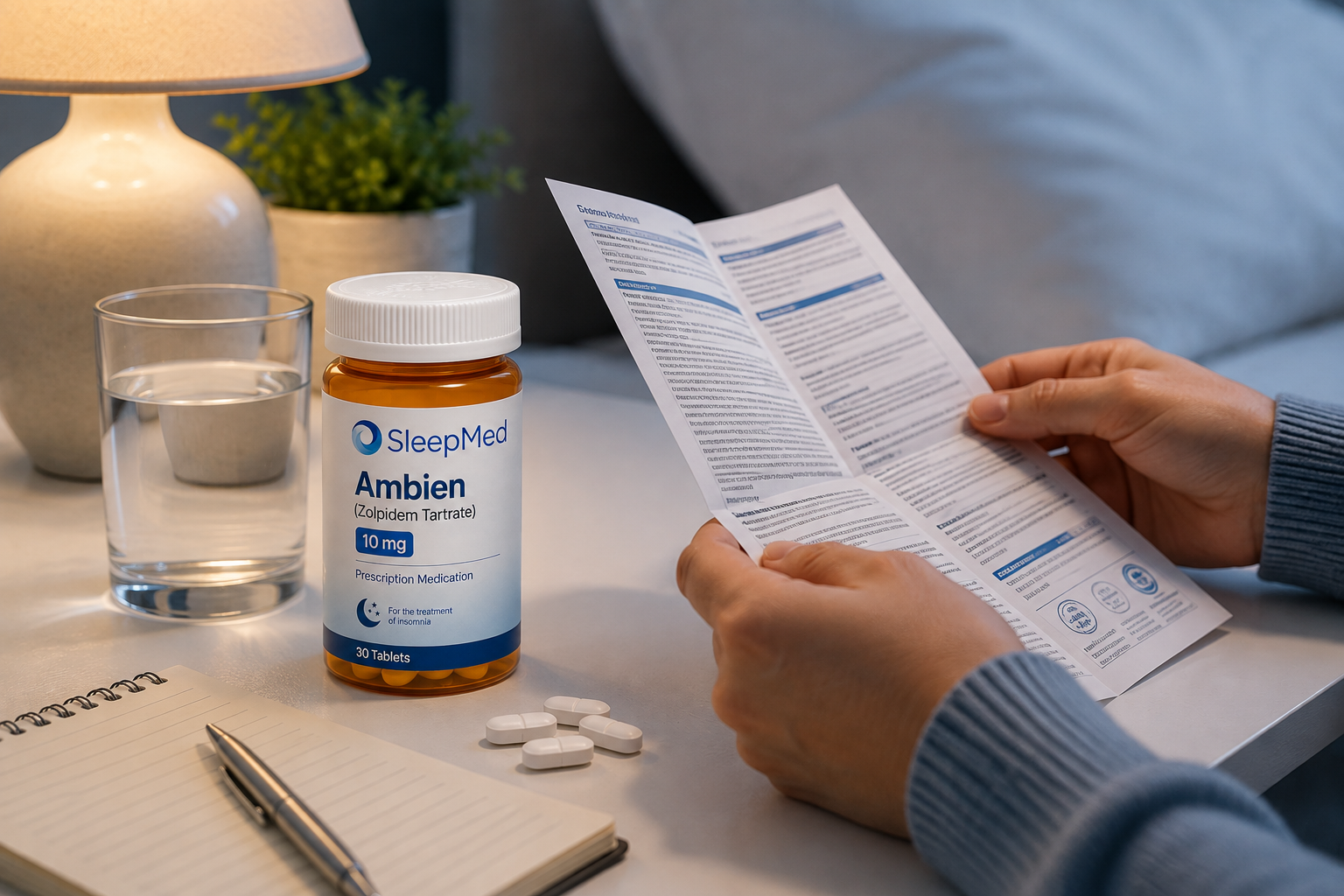
Important Ambien Safety Information
Ambien (zolpidem) can be effective for appropriately selected patients, but it also carries important risks. Understanding these risks before treatment—and knowing which symptoms require prompt medical attention—is an important part of using zolpidem safely.
Complex Sleep Behaviors
Ambien (zolpidem) carries an FDA Boxed Warning for rare but serious complex sleep behaviors that can occur while a person is not fully awake.
These behaviors may include:
- Sleepwalking
- Sleep-driving
- Preparing or eating food
- Making phone calls or performing other activities while not fully awake
- Having little or no memory of the activity afterward
These behaviors can occur even at recommended doses, and they may happen after the first dose or later during treatment.
If you experience a complex sleep behavior after taking Ambien, stop taking the medication and contact your healthcare provider immediately.
Ambien should not be used in patients who have previously experienced a complex sleep behavior after taking zolpidem.
Possible Side Effects
Like all prescription medications, Ambien can cause side effects. Not everyone experiences them, and their type and severity can vary from person to person.
Reported adverse effects can include:
- Drowsiness
- Dizziness
- Headache
- Reduced alertness
- Problems with coordination
- Next-morning impairment
More serious reactions are possible. In addition to complex sleep behaviors, zolpidem labeling includes warnings and precautions involving severe allergic reactions, abnormal thinking or behavioral changes, worsening depression or suicidal thoughts, respiratory depression in susceptible patients, and withdrawal effects following rapid dose reduction or discontinuation in some circumstances.
Your individual risk can also be affected by other medications, alcohol, medical conditions, and the dose of zolpidem being used.
Before starting treatment, tell your healthcare provider about all prescription medications, over-the-counter medicines, vitamins and supplements, alcohol use, and other substances you use. You should also discuss relevant medical and psychiatric conditions and any previous unusual reaction to a sleep medication.
Know When to Contact Your Provider
Contact your healthcare provider if you develop concerning side effects, unusual changes in behavior or mood, or if your insomnia worsens or does not improve as expected.
Seek prompt medical attention for symptoms suggesting a serious allergic reaction or other severe reaction.
This page does not include every possible adverse effect, contraindication, precaution, or drug interaction. Always follow your prescriber's instructions and read the FDA-approved Medication Guide provided with your prescription.
When Ambien May Not Be the Right Answer
Sometimes the most useful outcome of a sleep consultation is discovering that another sleeping pill isn't what you need.
Sleep difficulties can occur alongside or be influenced by:
- Obstructive sleep apnea
- Restless legs syndrome
- Circadian-rhythm disorders
- Pain
- Mental health conditions
- Medication effects
- Alcohol or other substance use
- Other medical conditions
Treating sleeplessness without understanding what is causing it can leave the real problem untouched.
SleepMed's experience in home and laboratory sleep diagnostics gives us a broader perspective.
When symptoms suggest that another sleep disorder may be involved, additional evaluation may be more useful than simply changing medications.
What Ambien Cannot Fix
Sometimes the Insomnia Is Trying to Tell Us Something
Ambien can help with sleep initiation.
But it cannot correct every reason someone isn't sleeping.
If breathing repeatedly stops during sleep, a sleeping medication doesn't reopen the airway.
If restless legs make lying still uncomfortable, sedation doesn't necessarily address the underlying problem.
If the biological clock has shifted, the timing problem may need to be addressed.
If anxiety about sleep has developed into a learned cycle of wakefulness, behavioral treatment may be more important than simply increasing sedation.
And if another medication or substance is interfering with sleep, adding another medication may not solve the underlying problem.
Sometimes treating insomnia means treating what is keeping sleep from happening.

Medication Isn't the Only Insomnia Treatment
Good sleep medicine doesn't begin and end with a pill bottle.
For chronic insomnia, one of the most important treatments does not come from a pharmacy. Cognitive behavioral therapy for insomnia (CBT-I) addresses the behaviors, thoughts, routines, and learned associations that can keep insomnia going—even after the problem that originally disrupted sleep has changed or resolved.
CBT-I may include strategies such as stimulus control, sleep scheduling, cognitive techniques, and relaxation approaches, with the goal of rebuilding a healthier and more reliable relationship between bed and sleep.
The National Heart, Lung, and Blood Institute (NHLBI) describes CBT-I as generally the first treatment option for long-term insomnia.
Depending on the individual, an insomnia treatment plan may include:
- Cognitive behavioral therapy for insomnia (CBT-I)
- Changes to sleep timing and behavioral patterns
- Relaxation and other behavioral strategies
- Treatment of medical, psychiatric, or sleep conditions contributing to insomnia
- Prescription medication when clinically appropriate
- Additional sleep evaluation or testing when another sleep disorder is suspected
- A combination of these approaches
Medication and behavioral treatment are not necessarily competitors. For some patients, medication may have an appropriate role while the broader treatment plan addresses the factors that are causing or maintaining insomnia.
The objective is not simply:
It is also:
What If Ambien Doesn't Work?
More Medication Is Not Automatically the Answer
If zolpidem isn't helping enough, increasing treatment on your own is not the solution.
Persistent insomnia may mean:
The timing of medication needs review.
The treatment may not match the insomnia pattern.
Another medication or substance may be interfering with sleep.
A coexisting sleep disorder may be present.
CBT-I or another non-medication treatment may be appropriate.
The diagnosis itself may need to be reconsidered.
Or zolpidem may simply not be the right medication for that patient.
Treatment failure is information.
It tells the clinician to reassess—not simply to prescribe more.
The SleepMed Difference: Looking Beyond the Sleepless Night
Insomnia happens at night. But the reason for it isn't always obvious from the experience of lying awake.
SleepMed's work extends beyond insomnia medication. Its broader sleep-health infrastructure includes laboratory sleep studies, home sleep testing, physician interpretation, therapy services, and clinical research. SleepMed reports approximately 240,000 diagnostic studies annually across a network that includes more than 120 sleep facilities.
That diagnostic background matters because a complaint as simple as “I can't sleep” can have very different explanations.
For one person, the problem may be chronic insomnia. For another, fragmented sleep may be related to obstructive sleep apnea, abnormal movements during sleep, a circadian-rhythm disorder, medication effects, or another condition that requires a different approach.
This doesn't mean that every patient with insomnia needs a sleep study.
Quite the opposite.
It means that when the clinical story suggests something more than uncomplicated insomnia, SleepMed has experience looking beyond the symptom and asking a more useful question:
Does Insomnia Require a Sleep Study?
Usually, no.
Insomnia is primarily evaluated through a detailed clinical history: when the sleep problem began, how often it occurs, how long it takes to fall asleep, whether awakenings occur during the night, the patient's sleep schedule, daytime symptoms, medications, health conditions, and other factors that may be affecting sleep.
Sleep studies such as overnight polysomnography are not routinely required for uncomplicated insomnia. Sleep testing becomes more useful when the history raises concern about another sleep disorder or when the diagnosis remains uncertain. This distinction is consistent with sleep-medicine guidance.
Testing may be considered when symptoms suggest:
Possible obstructive sleep apnea
Loud snoring, witnessed breathing pauses, gasping during sleep, or other symptoms may indicate that disrupted breathing—not insomnia alone—is interfering with sleep.
Sleep-related movement disorders
Repetitive movements during sleep or other features suggesting periodic limb movements can change the diagnostic picture.
Unusual nighttime behaviors
Complex or potentially injurious behaviors during sleep may warrant further investigation.
Significant unexplained daytime sleepiness
A patient who struggles not only with nighttime sleep but also with abnormal daytime sleepiness may require evaluation for a different or additional sleep disorder.
Persistent symptoms despite treatment
When insomnia does not respond as expected, reconsidering the original diagnosis and looking for contributing sleep disorders may be appropriate.
The American Academy of Sleep Medicine specifically notes that polysomnography is not routinely indicated for transient or chronic insomnia, but may be appropriate when another sleep disorder is suspected, the diagnosis is uncertain, or treatment has failed.
This is where SleepMed's diagnostic background becomes clinically relevant. The question can move beyond:
to
Sleep Medicine Leadership Behind the Approach

Richard K. Bogan, MD, FCCP, FAASM
Dr. Richard K. Bogan's career in sleep medicine spans clinical care, research, and the study of disorders that can affect both nighttime sleep and daytime function.
Board-certified in Sleep Medicine, Pulmonary Medicine, and Internal Medicine, his clinical and research interests include insomnia, narcolepsy, obstructive sleep apnea, circadian-rhythm disorders, and restless legs syndrome. He has also served as a principal investigator in numerous clinical trials involving sleep disorders.
That breadth matters when evaluating insomnia.
A patient may arrive because sleep won't come. But the clinician's job is not simply to identify a medication that can produce sleep. It is to consider whether the problem is primarily insomnia—or whether another sleep disorder, circadian issue, medical condition, medication, behavioral pattern, or combination of factors may be contributing.
That perspective captures an important part of SleepMed's clinical approach:
Sleep Is Something SleepMed Has Spent Decades Measuring
SleepMed's work is not limited to routine clinical care.
Its Clinical Research Solutions program supports sleep-related clinical research, central scoring, data analysis, and database science. SleepMed has also developed large collections of de-identified sleep-study data that can support research into how sleep disorders appear across patient populations.
Its research experience has included areas directly relevant to the broader evaluation of sleep problems, including insomnia, narcolepsy, obstructive sleep apnea, circadian-rhythm disorders, and restless legs syndrome.
This research background adds another dimension to SleepMed's approach to insomnia:
That doesn't make every difficult night a laboratory problem. It means clinical decisions can be informed by an organization whose work has long involved understanding what happens during sleep—not simply treating the symptom of being unable to sleep.
From Sleep Data to Individual Care
Years of working across sleep diagnostics, clinical care, and research reinforce a deceptively simple principle:
“I can't sleep” can mean difficulty falling asleep. It can mean repeated awakenings, waking too early, an irregular sleep schedule, sleep disrupted by another disorder, or a combination of problems.
That is why an individualized evaluation matters.
For some patients, medication may have an appropriate role. Others may benefit more from behavioral treatment, treatment of another sleep disorder, further diagnostic evaluation, or a combination of approaches.
The goal isn't simply to make tonight easier.
It's to understand what is interfering with healthy sleep and determine the most appropriate path forward.
Why SleepMed?
Decades of Experience. Nationwide Reach. Sleep Medicine at Our Core.
SleepMed has worked in sleep medicine since 1999, building an organization that extends across sleep diagnostics, physician services, treatment support, and clinical research.
Its current public information reports a diagnostic network performing approximately 240,000 sleep studies annually, with more than 120 sleep facilities and thousands of healthcare professionals using SleepMed services.
Those numbers matter not simply because they demonstrate scale. They represent years of experience encountering sleep disorders in many different forms.
For an insomnia patient, that broader perspective is important. Sleep problems are rarely one-size-fits-all, and appropriate care begins by understanding what may be interfering with healthy sleep rather than simply matching a symptom to a medication.
More Than a Prescription
SleepMed's approach extends beyond medication. Its broader sleep-health infrastructure brings together diagnostic testing, therapy support, experienced sleep clinicians, and clinical research .
SleepMed's research capabilities include work involving insomnia, narcolepsy, sleep apnea, circadian-rhythm disorders, and restless legs syndrome, along with large databases of de-identified sleep studies used to support sleep research.
For patients exploring insomnia treatment, that broader perspective is important. Medication may be appropriate for some people, while others may benefit from behavioral treatment, additional sleep evaluation, or treatment of an underlying sleep disorder.
Our Approach to Sleep Care
Understand the Sleep Problem
Look beyond the symptom to understand what may be disrupting healthy sleep.
Evaluate Before Prescribing
Treatment decisions should follow an individualized clinical assessment.
Personalize Treatment
Similar insomnia symptoms can have different causes and may require different treatment approaches.
Look Beyond Medication
Behavioral approaches, diagnostic testing, and treatment of contributing conditions may also be appropriate.
Continue the Conversation
Ongoing follow-up can help determine whether treatment remains appropriate and whether the plan should change.
Better Sleep Starts With Better Understanding
SleepMed combines decades of sleep-medicine experience with diagnostic infrastructure, clinical expertise, treatment support, and research capabilities to provide a broader perspective on sleep health.
For a patient struggling with insomnia, the goal is not simply to get through another difficult night.
It is to understand why healthy sleep has become difficult, determine what deserves treatment, and choose an approach that makes sense for the individual.
Better Sleep. Better Health.
A More Personal Online Evaluation
Two people can both say, “I can't sleep,” and need very different care.
That's why an online insomnia evaluation should go beyond checking symptoms on a form. Your sleep pattern, how long the problem has been present, what happens during the night, how you feel during the day, your medical history, medications, previous treatments, and signs of other sleep disorders can all change the clinical picture.
At SleepMed, the purpose of the evaluation is to help your provider understand your particular sleep problem before deciding what should happen next.
The Evaluation Doesn't Have a Predetermined Outcome
An online consultation is not designed to qualify someone for Ambien, and completing an assessment does not guarantee a prescription.
Depending on what the evaluation shows, the appropriate next step may involve CBT-I or another behavioral approach, changes to an existing treatment plan, treatment of a contributing condition, additional sleep evaluation, prescription medication when clinically appropriate, or in-person care.
For some patients, Ambien may be a reasonable option. For others, the most important finding may be that something else deserves attention first.
How Online Sleep Treatment Works at SleepMed
Sleep treatment should begin with understanding the problem—not assuming the solution.
SleepMed's online process is designed to move from assessment to clinical evaluation to an individualized treatment decision, with prescription medication considered only when medically appropriate and permitted under applicable prescribing requirements.

Complete Your Online Sleep Assessment
Start by telling us what has been happening with your sleep.
You'll complete a secure medical assessment covering your sleep concerns, health history, current medications, previous treatments, and other factors that may affect your sleep.
Your assessment may include questions about:
- Difficulty falling asleep or staying asleep
- Waking earlier than intended
- How long your sleep problems have been present
- Your typical sleep schedule
- Daytime fatigue, sleepiness, or impaired concentration
- Current prescription and over-the-counter medications
- Previous insomnia treatments and how you responded
- Alcohol and other substance use
- Relevant medical and mental health history
- Symptoms that may suggest another sleep disorder
This information gives your provider important context before the clinical consultation begins.

Meet With a Licensed Medical Provider
Next comes the clinical conversation.
A licensed healthcare provider reviews your assessment and discusses your sleep symptoms, medical history, medications, previous treatment experiences, and other relevant factors with you.
The provider may ask additional questions to better understand what may be causing or maintaining the insomnia and whether another medical or sleep condition should be considered.
This is also your opportunity to discuss your concerns, treatment goals, previous experiences with sleep medications, and questions about the available options.
The purpose is to understand the sleep problem before choosing the treatment.

Receive a Personalized Treatment Plan
There is no single treatment plan that fits every person with insomnia.
After evaluating your situation, your provider can recommend an individualized approach based on your symptoms, health history, treatment history, and clinical needs.
Depending on the findings, your plan may involve:
- CBT-I or other behavioral sleep strategies
- Changes to sleep timing, routines, or habits
- Treatment of contributing medical or sleep conditions
- Additional sleep evaluation or diagnostic testing
- Prescription medication when clinically appropriate
- Follow-up and ongoing monitoring
- Referral for in-person care when needed
If Ambien (zolpidem) is being considered, your provider can discuss why it may or may not be appropriate, along with its expected benefits, limitations, dosing, potential side effects, interactions, and important safety considerations.
The objective isn't to find the strongest sleep medication.
It's to find the treatment that fits the patient.

Prescription & Pharmacy Fulfillment
If your provider determines that Ambien is clinically appropriate—and prescribing it through telehealth is permitted under the requirements that apply to your situation—a prescription may be issued.
A valid prescription is then transmitted to an appropriate pharmacy for fulfillment.
The pharmacy, not the website, dispenses the medication.
Prescription availability, pharmacy participation, pricing, insurance coverage, pickup, and delivery options may vary.
Completing an online assessment or consultation does not guarantee that Ambien or any other medication will be prescribed.

Follow-Up & Ongoing Sleep Care
Good sleep care doesn't end when a prescription is written.
Follow-up gives you and your provider an opportunity to evaluate how the treatment is working and whether the plan still makes sense.
Follow-up may include reviewing:
- Changes in your ability to fall or stay asleep
- Overall sleep quality and sleep patterns
- Daytime alertness and functioning
- Side effects or medication concerns
- Whether treatment should continue, change, or stop
- Whether behavioral treatment should be added or adjusted
- Whether persistent symptoms warrant additional evaluation
If insomnia continues despite treatment, simply increasing or changing medication may not address the real problem.
Sometimes the more useful question becomes:
That question can lead to reassessment, a different treatment strategy, or further investigation when clinically appropriate.
Sleep care should evolve with the patient—not stop at the prescription.
Can Ambien Be Prescribed Online?
Potentially—but prescribing Ambien online is more complicated than simply completing a questionnaire.
Ambien (zolpidem) is a Schedule IV controlled substance, so prescribing it through telehealth must comply with applicable federal and state requirements. Federal rules governing controlled medications and telemedicine can change, and authorized practitioners may prescribe controlled substances through telehealth only when applicable legal and clinical requirements are satisfied. Patients can review the current HHS guidance on prescribing controlled substances via telehealth for up-to-date federal information.
Eligibility for an online prescription may depend on factors including:
- Your physical location during the consultation
- Provider licensure and authorization
- Federal controlled-substance requirements
- Applicable state laws
- The type of telehealth encounter
- Your medical history and current medications
- Your provider’s clinical judgment
- Whether telemedicine is appropriate for your circumstances
SleepMed’s online process should verify applicable requirements and include an appropriate medical evaluation before any controlled-substance prescription is issued.
Completing an online assessment or consultation does not guarantee an Ambien prescription. If zolpidem is not clinically appropriate—or cannot legally be prescribed through telehealth in your circumstances—your provider may discuss other treatment options or recommend in-person care.

Our Clinical Standard
A Prescription Should Be the Result of the Evaluation—Not the Purpose of It
At SleepMed, an insomnia consultation begins with a clinical question:
Not:
Ambien (zolpidem) may be an appropriate treatment for some patients, but the decision should follow an individualized evaluation of the patient's symptoms, sleep patterns, medical history, current medications, previous treatments, potential risks, and other factors that may be contributing to insomnia.
Sometimes that evaluation may support the use of medication. Sometimes it may point toward CBT-I or another behavioral approach, treatment of an underlying condition, additional sleep evaluation, a different treatment strategy, or in-person care.
And sometimes the appropriate decision is not to prescribe Ambien at all.
That's not a failure of the consultation. It's part of responsible sleep medicine.
What That Standard Means for You
At SleepMed, our approach is built around a few straightforward principles:
- Evaluation before prescribing — treatment decisions begin with understanding your sleep problem.
- Individualized treatment — similar symptoms do not always have the same cause or require the same treatment.
- Medication only when appropriate — completing an assessment or consultation does not guarantee a prescription.
- Safety before convenience — medical history, other medications, potential interactions, and treatment risks matter.
- Care beyond the prescription — behavioral treatment, diagnostic evaluation, treatment of contributing conditions, and follow-up may all be part of appropriate insomnia care.
Frequently Asked Questions About Ambien (Zolpidem)
Yes. Ambien is a brand name for zolpidem tartrate, a prescription sedative-hypnotic medication used for the short-term treatment of insomnia characterized by difficulty falling asleep.
Zolpidem is also available in other formulations and under other brand names, so the instructions are not necessarily interchangeable between products. If zolpidem is prescribed, follow the directions for the specific formulation you receive.
Ambien is designed to be taken immediately before bedtime, rather than earlier in the evening.
How quickly someone notices an effect can vary, and food can delay the medication's effect when it is taken with or immediately after a meal. For that reason, zolpidem should be used according to the timing instructions provided by your prescriber rather than taking an additional dose because it does not seem to be working quickly enough.
For immediate-release Ambien, you should have at least 7–8 hours available before you plan to wake up.
That window matters because zolpidem can impair alertness, coordination, reaction time, and driving ability the following morning—even when you feel awake.
If you cannot remain in bed for the recommended amount of time, talk with your healthcare provider about how to manage your treatment safely.
Do not take a second dose of immediate-release Ambien during the same night.
Ambien is intended to be taken once nightly immediately before bedtime, with 7–8 hours remaining before planned awakening.
If waking during the night is a recurring part of your insomnia, tell your provider. Frequent nighttime awakenings may change how the sleep problem should be evaluated and treated rather than simply calling for another dose.
No. Alcohol should not be used with Ambien.
Both alcohol and zolpidem can depress the central nervous system, and combining them can increase sedation, impaired coordination, abnormal behavior, and other safety risks.
Your provider should also know about other medications or substances that can cause drowsiness or CNS depression before zolpidem is prescribed.
Zolpidem is cleared from the body more slowly on average in women, which can result in higher blood levels the following morning and increase the risk of next-day impairment.
For immediate-release Ambien, FDA labeling recommends an initial dose of 5 mg for women and 5 or 10 mg for men. The lowest effective dose should be used, and the total dose should not exceed 10 mg once daily.
Individual factors still matter. Your prescriber determines the appropriate dose based on your clinical situation rather than sex alone.
Yes. Although uncommon, zolpidem can cause complex sleep behaviors in which a person performs activities while not fully awake and may have little or no memory of them afterward.
Reported behaviors include sleepwalking, sleep-driving, preparing or eating food, and performing other activities while not fully awake. Serious injuries and deaths have occurred.
Because of this risk, zolpidem carries an FDA Boxed Warning. If a complex sleep behavior occurs, stop taking the medication and contact your healthcare provider immediately. Ambien should not be used in patients who have previously experienced a complex sleep behavior after taking zolpidem.
Yes. Zolpidem is a Schedule IV controlled substance and has potential for misuse, abuse, and dependence.
Risk can be influenced by dose, duration of treatment, individual history, and other factors. Withdrawal symptoms can also occur in some people after rapid dose reduction or abrupt discontinuation.
Do not increase your dose, use Ambien more frequently than prescribed, or stop longer-term treatment abruptly without discussing it with your healthcare provider.
FDA labeling indicates immediate-release Ambien for the short-term treatment of insomnia characterized by difficulty initiating sleep, and treatment should be kept as short as clinically appropriate.
Persistent insomnia deserves reassessment rather than automatically continuing medication indefinitely. Your provider may need to consider whether the original treatment remains appropriate, whether behavioral treatment should play a larger role, or whether another condition is contributing to the sleep problem.
For chronic insomnia, cognitive behavioral therapy for insomnia (CBT-I) is generally recommended as first-line treatment.
CBT-I works differently from medication. Instead of primarily producing a sedative effect, it addresses behaviors, thoughts, schedules, and learned associations that can perpetuate insomnia.
That does not mean medication never has a role. For some patients, medication may be considered as part of an individualized treatment plan. The appropriate approach depends on the patient, the nature of the insomnia, previous treatment, and clinical judgment.
Don't increase the dose or take an additional dose on your own.
If Ambien is not helping as expected, the next step is usually reassessment. Your provider may review the diagnosis, dose and timing, other medications, sleep schedule, behavioral factors, and symptoms that could suggest another sleep or medical condition.
The answer may be a different treatment, CBT-I, treatment of a contributing condition, further sleep evaluation, or another approach—not necessarily a stronger sleeping medication.
Sometimes “Ambien isn't working” is clinically useful information because it prompts a closer look at why the insomnia is continuing.
Usually, not for uncomplicated insomnia.
Insomnia is generally evaluated primarily through clinical history rather than an overnight sleep study. Testing may become appropriate when symptoms suggest another sleep disorder, the diagnosis is uncertain, or treatment has not worked as expected.
For example, loud snoring or witnessed breathing pauses may raise concern about obstructive sleep apnea, while unusual nighttime behaviors, sleep-related movements, or significant unexplained daytime sleepiness can change the diagnostic picture.
This is where SleepMed's broader diagnostic experience can become relevant: sometimes the important question isn't only “Why can't I sleep?” but “Is something else happening during sleep?”
It isn't always possible to tell from the symptom “I can't sleep” alone.
Insomnia commonly involves difficulty falling asleep, staying asleep, waking earlier than intended, or poor-quality sleep despite having adequate opportunity to sleep. But similar nighttime problems can sometimes occur alongside—or be caused by—another sleep disorder.
For example, loud snoring, gasping, or witnessed breathing pauses may suggest obstructive sleep apnea. An uncomfortable urge to move the legs may point toward restless legs syndrome. Unusual movements or behaviors during sleep, a markedly shifted sleep schedule, or significant unexplained daytime sleepiness can also change the diagnostic picture.
That's why evaluation matters. A provider can look at your sleep pattern, daytime symptoms, medical history, medications, sleep schedule, and other clues to determine whether the problem appears to be insomnia or whether something else deserves investigation.
A sleep study is not routinely needed for uncomplicated insomnia, but testing may be appropriate when another sleep disorder is suspected or the diagnosis remains uncertain.
At SleepMed, the question isn't only:
It's also:
That distinction can change the treatment plan—and may help avoid treating the symptom while overlooking the reason behind it.
No. Ambien (zolpidem) is a Schedule IV controlled substance in the United States and requires a valid prescription. Online pharmacies advertising Ambien without a prescription may offer counterfeit, unapproved, or unsafe medications. Patients should use a properly licensed pharmacy that verifies prescriptions and provides access to a licensed pharmacist. For additional guidance, review the FDA's recommendations for buying medicines online safely.
Yes, in certain circumstances. An appropriately licensed healthcare professional may prescribe Ambien through telehealth when clinically appropriate and permitted under federal and state regulations. The evaluation should consider the severity of insomnia, previous treatments, medical history, and medication-related risks. For chronic insomnia, cognitive behavioral therapy for insomnia (CBT-I) is generally recommended as the initial treatment, as explained in the American College of Physicians' clinical recommendations. An online evaluation, including any assessment offered through SleepMed, does not guarantee a prescription.
A legitimate online pharmacy requires a valid prescription, maintains appropriate licensing, and provides access to a licensed pharmacist. Be cautious of websites promising instant approval, selling zolpidem without medical authorization, or offering prices that seem unusually low. The FDA's BeSafeRx program offers guidance on checking online pharmacy credentials and avoiding unsafe sellers.
Medical Review & Editorial Standards
SleepMed is committed to providing clear, accurate, and clinically responsible information about insomnia, sleep evaluation, and treatment options.
Our educational content is developed using established medical evidence and authoritative sources, including FDA-approved prescribing information, federal health guidance, peer-reviewed research, and clinical guidelines from recognized sleep-medicine organizations.
Medication information is reviewed for appropriate indications, dosing, contraindications, potential side effects and interactions, and important FDA safety information. For Ambien (zolpidem), this includes current prescribing information and the FDA Boxed Warning regarding complex sleep behaviors.
Treatment information is presented in the context of individualized sleep care. The appropriate approach to insomnia can vary based on symptoms, duration and pattern of sleep difficulties, medical history, current medications, previous treatments, potential underlying sleep disorders, and other clinical factors.
Sleep medicine and prescribing requirements continue to evolve. Our content should be periodically reviewed and updated when relevant clinical guidelines, FDA labeling, medication safety information, or regulatory requirements change.
Board Certified in Sleep Medicine, Pulmonary Medicine & Internal Medicine
Medical References
This page is informed by authoritative medical, regulatory, and SleepMed clinical resources.
U.S. Food and Drug Administration (FDA)
Official FDA prescribing information covering indications, dosage, contraindications, boxed warnings, precautions, adverse reactions, drug interactions, and safe use.
FDA safety information addressing next-morning impairment, alertness, driving, and zolpidem dosing recommendations.
FDA safety communication regarding rare but serious complex sleep behaviors associated with zolpidem and certain other insomnia medicines.
American College of Physicians (ACP)
Evidence-based clinical guidance supporting CBT-I as an initial treatment approach for adults with chronic insomnia.
U.S. Department of Health & Human Services (HHS)
Federal telehealth guidance regarding controlled-substance prescribing, provider requirements, and applicable telemedicine rules.
SleepMed
Information about SleepMed's clinical leadership, including Chief Medical Officer Richard K. Bogan, MD, and his credentials in sleep medicine.
Information about SleepMed's sleep-medicine research, clinical trials, therapeutic research, and sleep-study data.

Ready to Understand Your Sleep?
Another difficult night doesn't always mean you need a stronger sleep medication.
Sometimes it means you need a clearer understanding of why sleep has become difficult in the first place.
At SleepMed, care begins with that question. Your symptoms, sleep patterns, health history, medications, previous treatments, and other factors can all help build a more complete picture of what's interfering with healthy sleep.
Ambien (zolpidem) may be appropriate for some patients. For others, the better path may involve CBT-I, another treatment approach, addressing an underlying condition, additional sleep evaluation, or simply looking at the problem differently.
You don't need to know which treatment you need before you begin.
That's what the evaluation is for.
Better Sleep Starts with Better Understanding
Prescription medications are prescribed only when a licensed healthcare provider determines that treatment is clinically appropriate following an individualized medical evaluation. Eligibility for telehealth care and prescribing may vary based on the patient's location, provider licensure and authorization, and applicable federal and state requirements. Ambien (zolpidem) is a Schedule IV controlled substance, and completing an online assessment or consultation does not guarantee that Ambien—or any other medication—will be prescribed.
The information on this page is provided for general educational purposes and does not replace individualized medical advice, diagnosis, or treatment from a qualified healthcare professional.