


Sleep Treatments & Personalized Sleep Care
Better Sleep Begins With Understanding What Keeps You Awake
Sleep problems don't always look the same. Some people struggle to fall asleep. Others wake repeatedly throughout the night, while some experience overwhelming daytime sleepiness despite spending enough time in bed.
At SleepMed, we believe effective sleep treatment starts with identifying the underlying problem. Explore evidence-based approaches to insomnia, excessive daytime sleepiness, and sleep-related breathing disorders, including behavioral therapies, prescription medications, diagnostic testing, and ongoing care.

Table of Contents
 Finding the Right Treatment Starts With the Right Questions
- Explore Sleep Treatments
- Medication Isn't Always the First Answer
- When Sleep Problems Point to Something More
- Sleep Apnea Treatment: Beyond Medication
- Sleep Medicine Experience Behind Your Care
- How to Approach Sleep Treatment
- Frequently Asked Questions About Sleep Treatments
- Ready to Understand Your Sleep?
- Medical Information & Prescription Safety
Finding the Right Treatment Starts With the Right Questions
A restless night doesn't always mean insomnia. Persistent fatigue doesn't necessarily mean you need more sleep. And a medication that helps one person may not address the underlying cause of another person's symptoms.
Sleep disorders can involve sleep timing, breathing, neurological conditions, medications, or behavioral factors. Choosing an effective treatment requires looking beyond individual symptoms to understand how these factors may affect sleep quality and daytime functioning.
The 2025 VA/DoD Clinical Practice Guideline emphasizes structured screening, clinical assessment, and evidence-based management of chronic insomnia and obstructive sleep apnea. This approach reinforces the importance of distinguishing between insomnia, sleep-related breathing disturbances, and conditions that may overlap.
Depending on the findings, appropriate care may include cognitive behavioral therapy for insomnia (CBT-I), prescription medication, positive airway pressure therapy, oral appliances, or additional sleep evaluation. The right approach depends on the underlying condition, individual health needs, and clinical judgment.
The goal isn't simply to get through another night. It's to understand what is disrupting your sleep and identify an appropriate path forward.
Explore Sleep Treatments
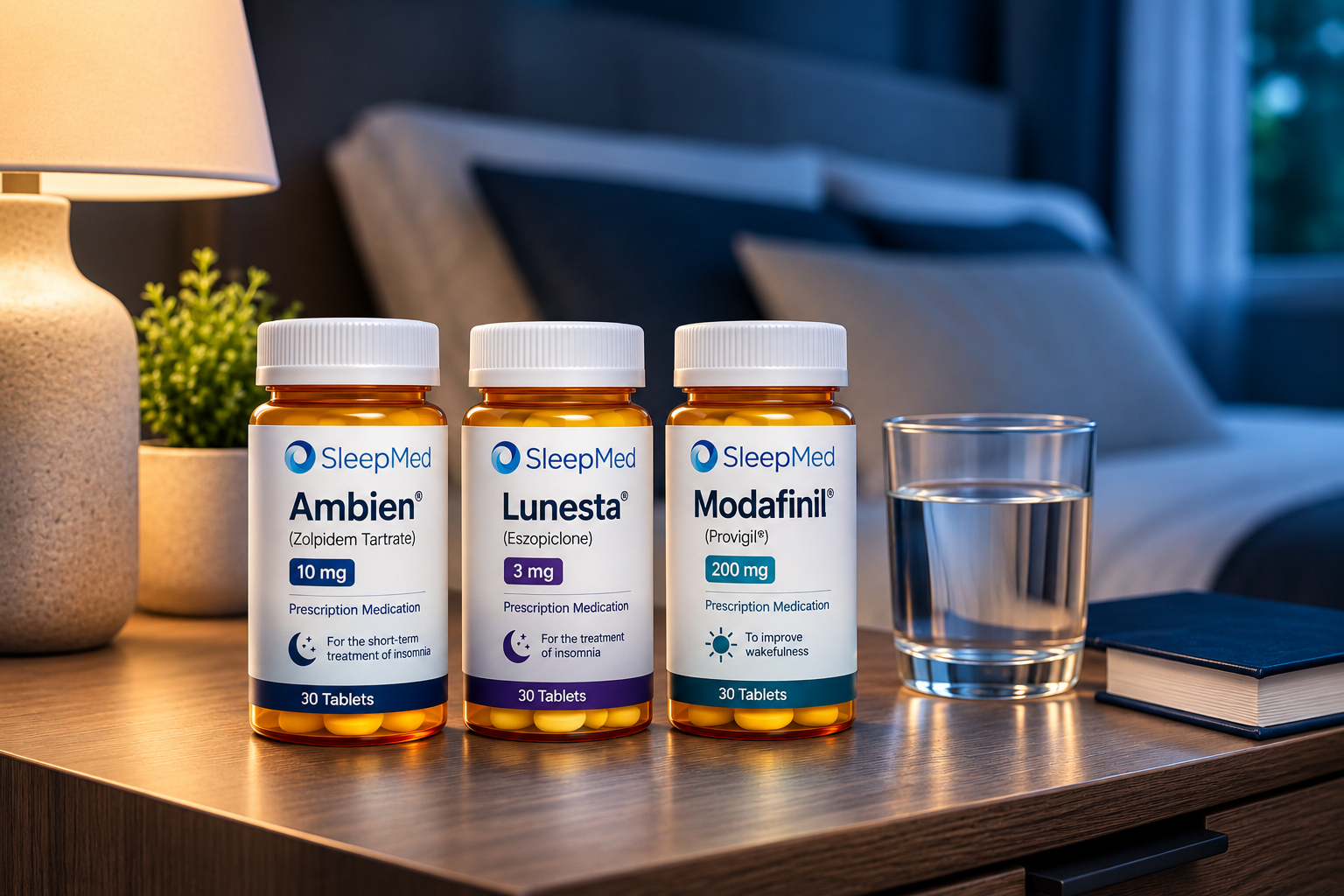
Ambien (Zolpidem) — Treatment for Sleep-Onset Insomnia
Ambien is an FDA-approved prescription sleep medication used for the short-term treatment of insomnia characterized by difficulty falling asleep. It works through the central nervous system to help initiate sleep.
Ambien is not appropriate for everyone. Its use requires careful consideration of dosage, next-day impairment, medication interactions, and the FDA boxed warning concerning complex sleep behaviors.
Lunesta (Eszopiclone) — Treatment for Falling and Staying Asleep
Lunesta is an FDA-approved prescription medication for adults experiencing difficulty falling asleep, staying asleep, or both.
Unlike treatments focused primarily on sleep initiation, Lunesta has demonstrated benefits for sleep onset and sleep maintenance. However, potential side effects, next-day impairment, dependence, and complex sleep behaviors must be considered before treatment.
Modafinil (Provigil) — Treatment for Excessive Daytime Sleepiness
Not every sleep disorder causes difficulty sleeping at night. Some conditions produce excessive daytime sleepiness that interferes with work, concentration, and daily functioning.
Modafinil is an FDA-approved wakefulness-promoting medication indicated to improve wakefulness in adults with excessive sleepiness associated with narcolepsy, obstructive sleep apnea, or shift work disorder.
For obstructive sleep apnea, modafinil does not treat the underlying airway obstruction and is not a substitute for appropriate primary therapy.
Medication Isn't Always the First Answer
Better Sleep May Begin Without a Prescription
For chronic insomnia, cognitive behavioral therapy for insomnia (CBT-I) is recommended as a first-line treatment.
CBT-I addresses the behaviors, thoughts, and learned sleep patterns that can perpetuate insomnia. Treatment may include stimulus control, sleep scheduling, relaxation techniques, and strategies for reducing sleep-related anxiety.
Unlike medication that primarily targets symptoms during a particular night, CBT-I aims to improve sleep patterns over time.
Prescription medication may still be appropriate for selected patients, depending on symptom severity, medical history, treatment response, and clinical judgment.
The most effective approach isn't necessarily the one that works fastest. It's the one that appropriately addresses the patient's sleep problem.
When Sleep Problems Point to Something More
Insomnia Isn't the Only Reason Sleep Goes Wrong
Difficulty sleeping, frequent awakenings, loud snoring, morning headaches, and excessive daytime fatigue can sometimes indicate conditions other than primary insomnia.
Obstructive sleep apnea, for example, causes repeated upper-airway obstruction during sleep, leading to disrupted breathing and fragmented rest. Restless legs syndrome, circadian rhythm disorders, and certain medical conditions may also interfere with restorative sleep.
Restless legs syndrome can cause uncomfortable sensations and an irresistible urge to move the legs, particularly during periods of rest or at night. According to the National Institute of Neurological Disorders and Stroke (NINDS), identifying contributing factors, including iron deficiency and associated medical conditions, can be an important part of evaluation and treatment.
When symptoms suggest an underlying sleep disorder, additional clinical evaluation may be appropriate. Sleep studies can help diagnose certain conditions, particularly sleep-related breathing disorders, but are not routinely necessary for uncomplicated insomnia.
Understanding what's happening beneath the surface can help guide treatment toward the underlying problem rather than simply addressing its symptoms.

Sleep Apnea Treatment: Beyond Medication
For people with obstructive sleep apnea (OSA), effective treatment focuses on keeping the upper airway open during sleep, reducing breathing interruptions, and improving sleep quality.
Continuous positive airway pressure (CPAP) therapy is an established treatment that can reduce breathing disturbances and improve daytime symptoms. Custom-fitted oral appliances and selected surgical approaches may also be considered depending on the patient's condition and treatment needs.
Choosing the right approach requires consideration of sleep apnea severity, symptoms, individual preferences, and clinical findings. The UK's National Institute for Health and Care Excellence (NICE) provides evidence-based recommendations for managing obstructive sleep apnea, including positive airway pressure therapy and custom-made mandibular advancement devices for appropriately selected patients.
Unlike medications used to manage insomnia or excessive daytime sleepiness, sleep apnea treatments aim to address the underlying breathing obstruction. Identifying and treating that obstruction is essential to effective long-term care.
Sleep Medicine Experience Behind Your Care
SleepMed's Commitment to Sleep Health
SleepMed brings extensive experience in sleep diagnostics, clinical research, and sleep therapy support.
Our work spans home sleep testing, laboratory-based diagnostic services, sleep apnea therapy, and collaboration with physicians and healthcare organizations.
SleepMed's published operational figures include:
- 240,000 diagnostic sleep studies annually
- 22,000+ physicians and dentists using SleepMed services
- 120 sleep facilities within its network
These figures describe SleepMed's broader sleep medicine operations and do not represent prescription volume or outcomes for individual medications.
Learn more about SleepMed's clinical research capabilities and company leadership.

How to Approach Sleep Treatment
Finding the right sleep treatment begins with understanding your sleep patterns and identifying what may be disrupting them. The National Heart, Lung, and Blood Institute (NHLBI), part of the National Institutes of Health (NIH), highlights the value of tracking sleep habits, nighttime awakenings, daytime alertness, and related symptoms. Keeping a sleep diary and discussing these observations with a healthcare professional can help determine whether further evaluation or diagnostic testing is appropriate.
1. Understand Your Symptoms
Consider whether your primary concern is difficulty falling asleep, staying asleep, snoring, interrupted breathing, or excessive daytime sleepiness. Tracking when symptoms occur and how they affect your daily life can provide useful insights.
2. Identify Possible Underlying Causes
A qualified healthcare professional can review your symptoms, medical history, medications, sleep habits, and other contributing factors to help identify potential causes of disrupted sleep and determine whether additional testing is needed.
3. Explore Appropriate Treatment Options
Depending on the diagnosis and individual circumstances, treatment may include cognitive behavioral therapy for insomnia (CBT-I), prescription medication, CPAP therapy, a custom oral appliance, or another evidence-based approach.
4. Monitor Progress and Reassess
Effective sleep care doesn't necessarily end when treatment begins. Follow-up evaluations can help assess symptom improvement, treatment effectiveness, potential side effects, and whether adjustments or further investigation are necessary.
Frequently Asked Questions About Sleep Treatments
For adults with chronic insomnia, CBT-I is strongly recommended by the AASM. Prescription medications may be considered when clinically appropriate, taking into account the individual's symptoms, health history, and treatment goals.
Both are prescription medications used for insomnia. Immediate-release Ambien is indicated for short-term treatment of difficulty falling asleep, while Lunesta is indicated for insomnia involving sleep onset and/or sleep maintenance. Neither medication is universally better for every patient.
No. Modafinil promotes wakefulness and is used for excessive sleepiness associated with specific diagnosed conditions. It is not an insomnia treatment and may worsen difficulty sleeping if used inappropriately.
Yes. Obstructive sleep apnea may cause repeated awakenings, fragmented sleep, and daytime fatigue. Patients experiencing these symptoms alongside snoring or witnessed breathing pauses may benefit from evaluation for sleep apnea.
Potentially. According to HHS guidance on controlled-substance prescribing through telehealth, authorized practitioners may prescribe controlled medications remotely when applicable requirements are met.
Ambien, Lunesta, and Modafinil are Schedule IV controlled substances in the United States. Completing an online questionnaire or consultation does not guarantee a prescription.
No. Sleep studies are not routinely required for uncomplicated chronic insomnia. They may be recommended when symptoms suggest sleep apnea, certain movement disorders, or other conditions requiring diagnostic testing.
No. Behavioral treatments, sleep apnea therapy, changes to contributing medications or medical conditions, and other individualized approaches can play important roles in sleep care.

Ready to Understand Your Sleep?
Your next step toward better sleep begins with understanding your nights.
Whether you're struggling with insomnia, persistent awakenings, or excessive daytime sleepiness, learning about available treatments can help you make informed decisions about your sleep health.
Explore SleepMed's diagnostic services, sleep therapy resources, and educational treatment guides to better understand your options.
Medical Information & Prescription Safety
The information on this page is intended for general educational purposes and does not replace individualized medical advice, diagnosis, or treatment.
Prescription medications should be used only when an authorized healthcare professional determines they are clinically appropriate. Eligibility for telehealth prescribing depends on applicable laws, provider authorization, and individual medical circumstances. An assessment or consultation does not guarantee a prescription.