


Provigil (Modafinil) Online Care for Excessive Sleepiness
Persistent daytime sleepiness is more than feeling tired.
When staying awake becomes difficult despite adequate opportunity for sleep, it may be a sign of a sleep disorder that deserves proper evaluation.
At SleepMed, care starts by understanding why you're sleepy. A licensed medical provider reviews your symptoms, sleep-wake schedule, medical history, existing diagnoses, previous sleep testing, current treatments, and other factors that may be affecting your ability to stay awake.
Provigil (modafinil) may be considered for appropriate patients when wakefulness-promoting treatment is clinically indicated and prescribing requirements are met.
Better wakefulness starts with understanding your sleep.

Table of Contents
 When Staying Awake Becomes a Medical Problem
- Tired, Fatigued, or Truly Sleepy?
- What Is Provigil (Modafinil)?
- How to Obtain Modafinil Online for Excessive Daytime Sleepiness
- Why Modafinil May Be Considered for Excessive Sleepiness
- What About Idiopathic Hypersomnia?
- Modafinil Is Not a Substitute for Sleep
- Before Modafinil, We Ask: Why Are You Sleepy?
- The SleepMed Difference: Looking at the Night Behind the Day
- When Objective Sleep Testing Matters
- SleepMed Has Studied This Exact Diagnostic Problem
- Sleep Medicine Leadership Behind the Approach
- Sleep Is Something SleepMed Has Spent Decades Measuring
- From Sleep Data to Daytime Function
- What Does Modafinil Actually Do?
- What Should Treatment Actually Accomplish?
- Provigil Dosage & How It Is Taken
- Why Timing Matters
- Taking Provigil Safely
- Important Provigil Safety Information
- Possible Side Effects
- Hormonal Contraception & Important Drug Interactions
- Feeling More Awake Doesn't Automatically Mean You're Safe to Drive
- When Provigil May Not Be the Right Answer
- What Modafinil Cannot Fix
- Provigil Is Not a “Smart Drug”
- What If Modafinil Isn't Enough?
- Treatment Beyond Modafinil
- From Research to Real Sleep Medicine
- Why SleepMed?
- Our Approach to Excessive Sleepiness
- More Than Staying Awake
- A More Personal Online Evaluation
- How Online Sleep Treatment Works at SleepMed
- Can Modafinil Be Prescribed Online?
- Our Clinical Standard
- Frequently Asked Questions About Provigil (Modafinil)
- Medical Review & Editorial Standards
- Medical References
- You Shouldn't Have to Fight Sleepiness Every Day
When Staying Awake Becomes a Medical Problem
Everyone feels sleepy sometimes.
A short night, a demanding week, jet lag, or an unusually long day can leave almost anyone reaching for another cup of coffee. That kind of sleepiness often has an obvious explanation.
But persistent excessive sleepiness can feel different.
You may struggle to stay awake during meetings, while reading, watching television, riding as a passenger, or sitting quietly. Concentration may fade. Work becomes harder. Conversations require more effort. You may find yourself planning the day around opportunities to nap—or fighting sleep at times when you need to be fully alert.
At that point, the more useful question isn't:
It's:
Excessive sleepiness can occur with conditions such as narcolepsy, obstructive sleep apnea, and shift work disorder, but it can also be related to insufficient sleep, medications, irregular sleep schedules, other sleep disorders, or medical and psychiatric conditions.
That's why treatment shouldn't begin by assuming that a wakefulness-promoting medication is the answer.
First understand the sleepiness. Then decide what belongs in the treatment plan.

Tired, Fatigued, or Truly Sleepy?
People often use tired, fatigued, and sleepy to describe the same feeling. Clinically, however, they can mean different things—and the distinction matters.
Sleepiness is the tendency or increased likelihood to fall asleep. Someone with excessive daytime sleepiness may doze unintentionally, struggle to remain awake during quiet activities, or feel an overwhelming need to sleep during the day.
Fatigue is different. It can feel like physical exhaustion, low energy, mental weariness, or reduced stamina without necessarily creating an increased tendency to fall asleep.
And sometimes the problem is simpler: there hasn't been enough sleep. A medication that promotes wakefulness does not replace the biological need for adequate sleep.
These experiences can overlap, which is one reason a clinical evaluation looks beyond a single description such as “I'm tired all the time.”
Your provider may want to understand:
- How much sleep you usually get
- Whether you nap intentionally or fall asleep unintentionally
- When your sleepiness is strongest
- Whether you snore, gasp, or have witnessed breathing pauses during sleep
- Whether you work nights or rotating shifts
- Whether you already have a diagnosed sleep disorder
- Whether existing treatment—such as PAP therapy for sleep apnea—is being used effectively
- Whether medications or other substances could be contributing
- How sleepiness affects driving, work, concentration, and daily activities
Sometimes what sounds like fatigue is excessive sleepiness. Sometimes what sounds like excessive sleepiness is chronic sleep deprivation.
And sometimes daytime sleepiness is the clue that leads to an underlying sleep disorder.
What Is Provigil (Modafinil)?
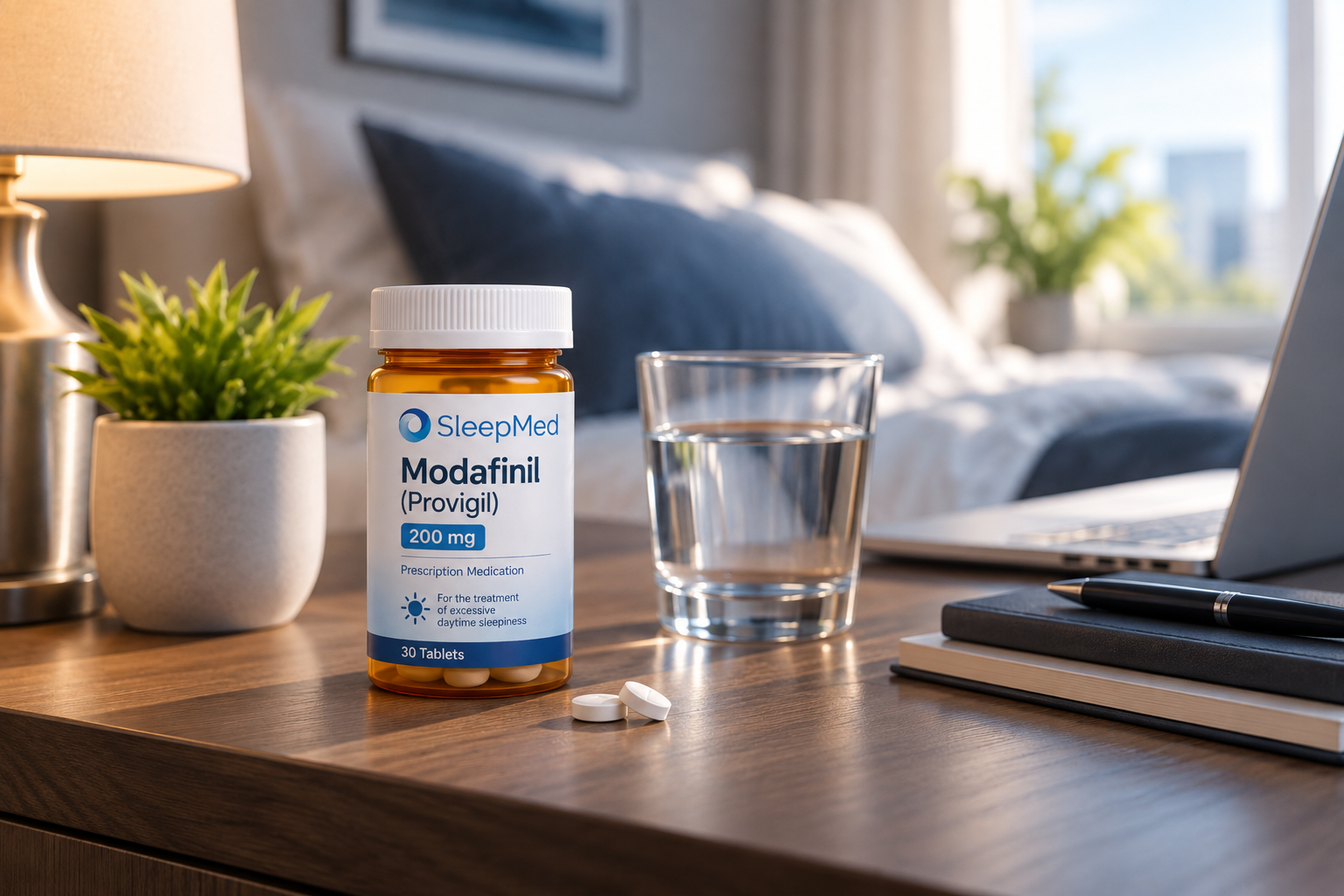
Provigil is the brand name for modafinil, a prescription wakefulness-promoting medication.
The FDA approves Provigil to improve wakefulness in adults with excessive sleepiness associated with three conditions:
- Narcolepsy
- Obstructive sleep apnea (OSA)
- Shift work disorder (SWD)
Provigil is a Schedule IV controlled substance. It should be used only when prescribed for an appropriate patient following medical evaluation.
Modafinil is sometimes described casually as a stimulant, but that description can oversimplify how the medication is used in sleep medicine. It promotes wakefulness and has effects involving brain systems associated with wakefulness, including dopamine signaling, although its precise therapeutic mechanism is not fully established.
What matters clinically is what modafinil isn't.
It isn't a substitute for adequate sleep.
It doesn't cure narcolepsy.
It doesn't correct the airway obstruction that causes obstructive sleep apnea.
And it isn't intended simply to make a healthy person more productive, study longer, or function indefinitely on too little sleep.
For appropriately selected patients, its role is much more specific:
How to Obtain Modafinil Online for Excessive Daytime Sleepiness
Feeling sleepy despite spending enough time in bed can be frustrating. But persistent daytime sleepiness is not always a problem that can be solved by simply staying more alert.
Modafinil (Provigil) is a prescription wakefulness-promoting medication approved for excessive sleepiness associated with narcolepsy, obstructive sleep apnea, and shift work disorder in adults. These conditions have different causes and require different approaches to diagnosis and treatment.
Before obtaining Modafinil online, the underlying reason for sleepiness should be evaluated. For example, a patient with obstructive sleep apnea may need adjustments to CPAP therapy, while someone with suspected narcolepsy may require specialized diagnostic testing.
From Sleep Evaluation to a Modafinil Prescription
A medical evaluation considers more than whether a patient feels tired. Sleep duration, work schedules, existing diagnoses, treatment effectiveness, and other possible causes of sleepiness may all influence the decision.
When Modafinil is clinically appropriate, a licensed clinician may issue a prescription in accordance with applicable prescribing regulations. As a Schedule IV controlled substance, Modafinil requires a valid prescription and should be dispensed through a properly licensed pharmacy.
Online pharmacies advertising prescription-free Modafinil should be avoided. Medication should complement appropriate management of the underlying sleep disorder—not replace it.
Why Modafinil May Be Considered for Excessive Sleepiness
The purpose of modafinil treatment is not to help someone simply push through tiredness.
Provigil (modafinil) is a wakefulness-promoting medication FDA-approved to improve wakefulness in adults with excessive sleepiness associated with narcolepsy, obstructive sleep apnea (OSA), or shift work disorder (SWD).
For appropriately selected patients, modafinil may make it easier to remain awake and function during the hours when they are expected to be alert.
But improving wakefulness and understanding why someone is sleepy are two different parts of care.
Someone struggling to stay awake may have narcolepsy. Another person may still be sleepy despite treatment for sleep apnea. Someone working overnight may be trying to remain awake at a time when the body's internal clock is promoting sleep.
The symptom can look similar.
The reason behind it may be very different.
That's why the clinical question shouldn't simply be:
A better question is:
Narcolepsy and Excessive Daytime Sleepiness
Narcolepsy is a chronic neurologic sleep disorder in which the brain's regulation of sleep and wakefulness is disrupted.
For someone living with narcolepsy, sleepiness can be difficult to resist. Staying awake through ordinary activities may require far more effort than it does for someone who is simply tired after a poor night's sleep.
Provigil is FDA-approved to improve wakefulness in adults with excessive sleepiness associated with narcolepsy. The American Academy of Sleep Medicine also gives modafinil a strong recommendation for the treatment of narcolepsy in adults.
That does not mean every person with narcolepsy should receive modafinil.
Narcolepsy can involve more than daytime sleepiness. Depending on the individual, symptoms may include cataplexy, disrupted nighttime sleep, sleep paralysis, hallucinations around sleep transitions, and other features. Treatment therefore needs to reflect the patient's complete symptom profile, not only how sleepy they feel during the day.
Modafinil can address excessive sleepiness.
It does not define the entire treatment of narcolepsy.
This distinction will become particularly important later when we introduce SleepMed's diagnostic experience with narcolepsy and the MSLT.
Obstructive Sleep Apnea and Residual Sleepiness
Obstructive sleep apnea repeatedly disrupts breathing during sleep. Treating that underlying obstruction remains fundamental.
Provigil does not treat the airway obstruction responsible for OSA.
Its FDA-approved role is specifically to treat excessive sleepiness associated with OSA. The current prescribing information states that when CPAP is the treatment of choice, a maximal effort should be made to treat with CPAP adequately before starting Provigil for excessive sleepiness and during Provigil treatment.
In other words:
That matters because a patient can experience improvement in daytime alertness while the underlying breathing disorder still requires appropriate treatment.
If significant sleepiness remains despite treatment for OSA, the clinical conversation therefore becomes more detailed:
Is the underlying sleep apnea being adequately treated?
Is PAP being used consistently and effectively?
Is the patient getting enough sleep?
Could another medication or medical condition be contributing?
Could another sleep disorder be present?
And only after looking at that broader picture does it make sense to ask whether wakefulness-promoting treatment belongs in the plan.
At SleepMed, the goal shouldn't be to cover up the daytime symptom while overlooking what is happening during sleep.
Shift Work Disorder and Wakefulness
Sometimes the problem isn't simply how much someone sleeps.
It's when they have to be awake.
The human sleep-wake system is strongly influenced by circadian rhythms. For people who regularly work overnight or at times that conflict with their biological sleep-wake cycle, staying alert at work and sleeping at the desired time can become difficult.
Shift work disorder involves insomnia and/or excessive sleepiness associated with a work schedule that overlaps the usual period for sleep.
Provigil is FDA-approved to improve wakefulness in adults with excessive sleepiness associated with shift work disorder. Current prescribing information recommends taking it approximately one hour before the start of the work shift when prescribed for SWD.
But here again, medication is only one part of the picture.
A proper evaluation should consider the person's work schedule, sleep opportunity, timing and duration of sleep, days-off pattern, other sleep disorders, medications, and the degree to which sleepiness affects function and safety.
Modafinil can promote wakefulness during the work period.
It cannot make chronic sleep deprivation harmless or eliminate the biological need for sleep.
What About Idiopathic Hypersomnia?
Idiopathic hypersomnia (IH) is a central disorder of hypersomnolence characterized by persistent excessive sleepiness that cannot be adequately explained by insufficient sleep or another condition after appropriate evaluation.
People with IH may experience profound daytime sleepiness despite substantial sleep, difficulty waking, prolonged sleep, or significant sleep inertia—the heavy, confused feeling that can make becoming fully awake unusually difficult.
Modafinil has an important place in clinical guidance for this disorder. The American Academy of Sleep Medicine's clinical practice guideline gives modafinil a strong recommendation for the treatment of idiopathic hypersomnia in adults.
However, there is an important distinction:
Idiopathic hypersomnia is not one of the FDA-listed indications for Provigil.
The FDA-approved Provigil indications are excessive sleepiness associated with narcolepsy, OSA, and shift work disorder.
Therefore, when modafinil is prescribed specifically for idiopathic hypersomnia, that use is generally considered off-label in the United States.
Off-label does not mean that a treatment is automatically inappropriate. It means the particular use is outside the medication's FDA-approved labeling. Whether it is appropriate for an individual patient remains a clinical decision based on the diagnosis, evidence, potential benefits and risks, other treatment options, and the treating provider's judgment.
Modafinil Is Not a Substitute for Sleep
A medication that promotes wakefulness can make it tempting to think of sleepiness as something that simply needs to be switched off.
Human sleep doesn't work that way.
If someone routinely sleeps five hours when their body needs considerably more, the underlying problem may be insufficient sleep. Becoming temporarily more alert does not erase accumulated sleep loss or turn inadequate sleep into adequate sleep.
The same principle applies when another sleep disorder is responsible.
In obstructive sleep apnea, modafinil doesn't reopen a collapsing airway.
In narcolepsy, it doesn't cure the underlying disorder.
In shift work disorder, it doesn't remove the biological conflict between working at night and the body's circadian drive for sleep.
Modafinil has a legitimate clinical role—but that role becomes clearer when we stop asking it to do things it wasn't designed to do.
That is why SleepMed's approach begin one step earlier.
Not with:
But with:
Before Modafinil, We Ask: Why Are You Sleepy?
Excessive daytime sleepiness is a symptom—not a diagnosis.
Two people may both say, “I can't stay awake during the day,” while the reason behind that experience is completely different.
One may have narcolepsy. Another may have untreated or incompletely treated obstructive sleep apnea. Someone else may be working against their circadian rhythm every night. Insufficient sleep, medications, other sleep disorders, and medical conditions can also contribute to excessive sleepiness.
That is why a clinical evaluation should begin before deciding whether a wakefulness-promoting medication belongs in the treatment plan.
A provider may look at how much you sleep, when you sleep, how easily you fall asleep during the day, whether you nap unintentionally, whether you snore or stop breathing during sleep, your work schedule, medications, existing diagnoses, previous sleep testing, and how sleepiness affects your ability to function safely.
For some patients, the history provides much of the answer.
For others, the next step may involve objective sleep testing.
For more information about how sleep disorders are evaluated, see the NIH/NHLBI guide to sleep studies.
The SleepMed Difference: Looking at the Night Behind the Day
Daytime sleepiness may be most noticeable at work, behind a desk, during a conversation, or in the middle of the afternoon.
But sometimes the explanation begins hours earlier—while the patient is asleep.
This is where SleepMed brings something more substantial to the conversation than medication information alone: decades of experience in sleep diagnostics and sleep medicine.
SleepMed reports approximately 240,000 diagnostic studies annually, including laboratory and home-based studies. Its public sleep-study information also reports 650 interpreting sleep physicians and sleep clinicians.
That diagnostic perspective matters because excessive sleepiness can be the daytime consequence of something happening during sleep.
Obstructive sleep apnea, for example, can cause repeated breathing interruptions at night and daytime sleepiness, impaired concentration, and slower reactions during the day.
So when someone says:
SleepMed's broader sleep-medicine perspective allows another question to follow:
Sometimes the symptom appears at 2 p.m.
The problem may begin at 2 a.m.
When Objective Sleep Testing Matters
Not everyone with daytime sleepiness needs the same test—or necessarily needs a sleep study at all.
The appropriate evaluation depends on the patient's symptoms, history, existing diagnoses, sleep schedule, and what disorder is suspected.
When objective testing is clinically appropriate, several different tools may answer very different questions.
Overnight Polysomnography (PSG)
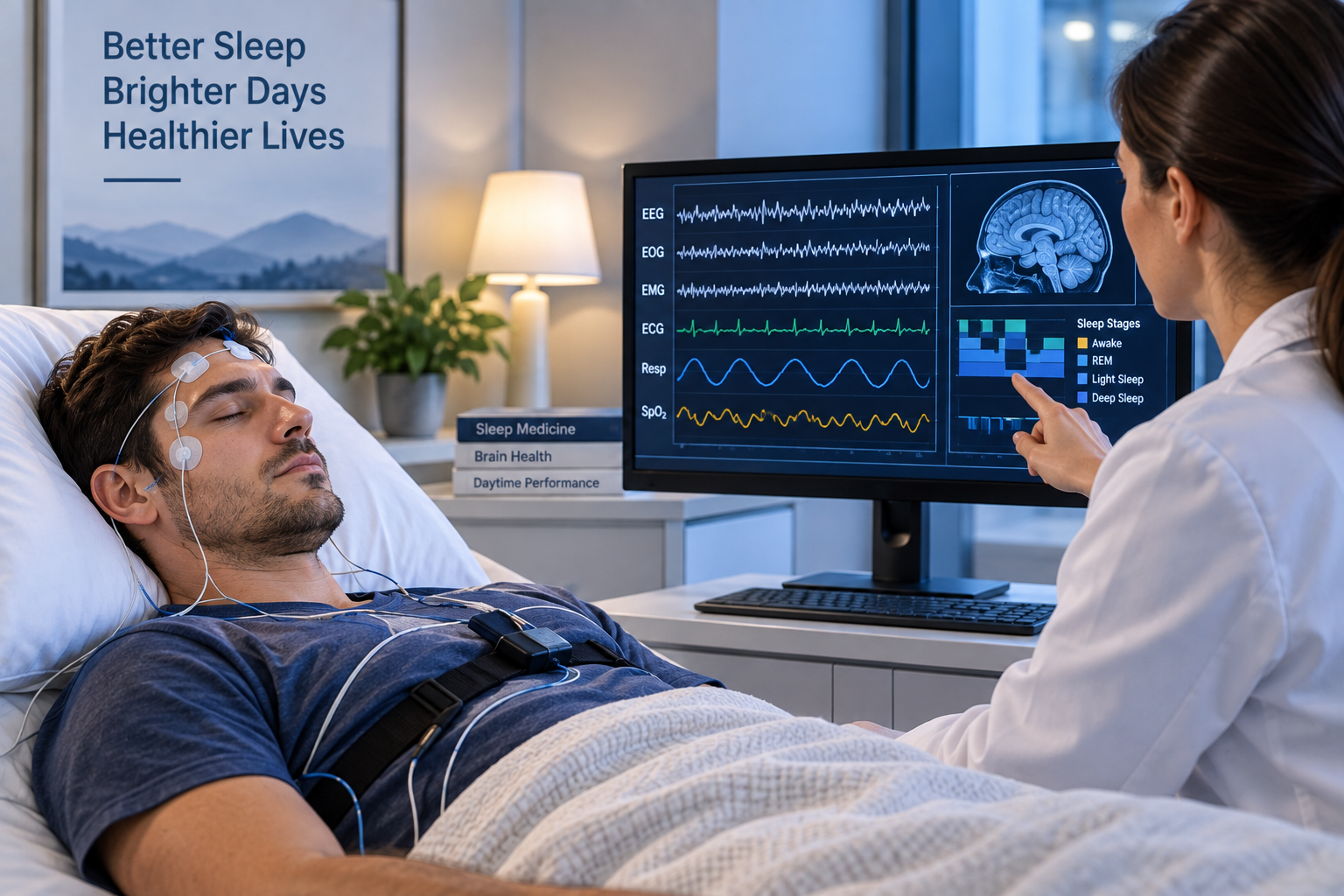
An overnight sleep study records physiologic signals while a person sleeps. Depending on the study, these can include brain activity, eye movements, breathing, oxygen levels, heart rate, and muscle activity.
It can help clinicians investigate conditions such as sleep-disordered breathing and other disorders that may disrupt sleep or contribute to daytime symptoms. The NIH describes polysomnography and related sleep studies as tools used to evaluate how a person sleeps and how the body responds to sleep problems.
Home Sleep Testing
For appropriately selected patients when obstructive sleep apnea is suspected, testing may sometimes be performed at home rather than in a sleep laboratory.
SleepMed operates its own home sleep-testing program alongside its laboratory network and reports approximately 160,000 home sleep tests annually, in addition to approximately 80,000 annual laboratory studies.
A home sleep apnea test, however, is not a general-purpose test for every cause of excessive sleepiness. Its primary role is evaluating sleep-disordered breathing in appropriate patients.
Multiple Sleep Latency Test (MSLT)
When narcolepsy or certain other central disorders of hypersomnolence are suspected, a different kind of testing may be needed.
The Multiple Sleep Latency Test (MSLT) evaluates how quickly someone falls asleep during a series of scheduled daytime nap opportunities and includes monitoring of sleep stages.
The NIH describes MSLT as a test that measures how quickly a person falls asleep during daytime naps while recording brain activity and eye movements.
AASM guidance identifies the MSLT as part of the evaluation of suspected narcolepsy and notes that it may also be used in evaluating suspected idiopathic hypersomnia. Importantly, it is not simply a generic test for everyone who feels sleepy.
And a test result should not exist in isolation. AASM guidance emphasizes integrating objective findings with clinical history and other medical information rather than defining sleepiness solely by one MSLT measurement.
This gives us an important SleepMed principle:
SleepMed Has Studied This Exact Diagnostic Problem
Sleepiness isn't always diagnostically straightforward.
SleepMed researchers Alyssa Cairns and Richard Bogan, MD, examined this issue in research published in Sleep Medicine involving sleepy patients whose overnight polysomnography showed a sleep-onset REM period, or SOREMP.
Their research examined how often patients with this finding subsequently received Multiple Sleep Latency Testing and highlighted the potential importance of considering a narcolepsy workup when clinically appropriate. SleepMed's own publication summary specifically notes the importance of considering narcolepsy evaluation when a SOREMP is observed and of appropriate follow-up when PAP treatment is chosen.
Daytime sleepiness can be easy to describe and harder to explain.
Someone may initially appear to have sleepiness associated with sleep apnea. Another finding may raise the possibility of narcolepsy. Treatment of one disorder may improve the picture—or persistent sleepiness may indicate that another question still needs to be answered.
The lesson isn't that every sleepy patient needs an MSLT.
Sleep Medicine Leadership Behind the Approach

Richard K. Bogan, MD, FCCP, FAASM
Dr. Richard K. Bogan's work is particularly relevant to a page about excessive daytime sleepiness because his clinical and research experience extends across multiple disorders that can affect the boundary between sleep and wakefulness—including narcolepsy, sleep apnea, insomnia, circadian rhythm disorders, and other sleep conditions.
That breadth matters.
A patient arriving with excessive sleepiness doesn't arrive with the diagnosis already attached.
The clinical task is to determine whether the problem reflects narcolepsy, inadequately treated sleep apnea, a circadian mismatch, insufficient sleep, medication effects, another medical or sleep disorder—or a combination of factors.
That is why expertise in sleep medicine matters before the conversation becomes a conversation about modafinil.
The principle behind the approach can be expressed simply:
Sleep Is Something SleepMed Has Spent Decades Measuring
Sleep medicine isn't based only on how someone says they slept last night.
It can also involve physiologic signals, breathing patterns, sleep stages, daytime sleep tendency, treatment response, and large bodies of clinical data.
SleepMed's Clinical Research Solutions operation supports clinical research, central research scoring, quality assurance, and database science. SleepMed also reports maintaining large deidentified databases of attended and unattended sleep studies and publishing scientific manuscripts and conference research with collaborators.
That research perspective is especially relevant when dealing with excessive sleepiness.
The complaint “I'm sleepy all day” sounds simple.
The physiology behind it may not be.

From Sleep Data to Daytime Function
Ultimately, a sleep study, diagnosis, or medication matters because of what happens in a person's actual life.
Can you stay awake through the workday?
Can you concentrate?
Are you unintentionally falling asleep?
Are you struggling during quiet activities?
Do you feel alert enough to drive safely?
Has treatment for an existing sleep disorder improved your daytime function—or are you still significantly sleepy?
These questions help connect what happens during sleep with what happens while you're awake.
For some patients, improving treatment of an underlying sleep disorder may improve daytime sleepiness.
For others, additional diagnostic evaluation may be necessary.
And for appropriately selected patients with a relevant sleep-wake disorder, a wakefulness-promoting medication such as modafinil may become one part of the treatment plan.
But the sequence matters:
Investigate the cause.
Treat the underlying problem.
Then decide what additional treatment is needed.
What Does Modafinil Actually Do?
Provigil (modafinil) promotes wakefulness.
That sounds straightforward, but it is important not to confuse wakefulness with stimulation, energy, or simply feeling less tired.
For someone with clinically significant excessive sleepiness, the goal is more practical: to improve the ability to remain awake during the hours when wakefulness is expected.
Modafinil's exact therapeutic mechanism is not completely understood. FDA prescribing information notes that modafinil has wake-promoting actions and interacts with the dopamine transporter, although its pharmacologic profile differs from conventional sympathomimetic stimulants.
The effect should therefore not be framed as:
A better question is:
That distinction matters.
For a patient with narcolepsy, improvement may mean having greater ability to remain awake during ordinary daytime activities.
For someone with obstructive sleep apnea who continues to experience clinically significant sleepiness despite appropriate treatment of the underlying obstruction, it may mean addressing that residual sleepiness as part of a broader treatment plan.
For someone with shift work disorder, it may mean improving wakefulness during a work period that conflicts with the body's usual sleep-wake rhythm.
The goal isn't artificial alertness. It's more appropriate wakefulness when a medical sleep-wake disorder is interfering with it.
What Should Treatment Actually Accomplish?
A medication can change how awake someone feels without answering every question about their sleep.
That is why successful treatment shouldn't be judged by one question alone:
“Do I feel less sleepy?”
A broader clinical conversation may consider whether you can remain awake during intended waking hours, function more consistently at work or during daily activities, and whether excessive sleepiness is still interfering with concentration or safety.
It should also ask whether the underlying sleep disorder is being appropriately managed.
This is especially important with obstructive sleep apnea. Provigil may improve associated excessive sleepiness, but it does not treat the airway obstruction responsible for OSA. Treatment directed at the obstruction remains necessary.
And there is another important distinction:
Treatment should support appropriate daytime function—not create the expectation that a person can safely shorten sleep indefinitely.
At SleepMed, that gives us a better measure of progress:
Provigil Dosage & How It Is Taken
Provigil should be taken exactly as prescribed. The appropriate dose and timing depend partly on why it is being used.
For adults with narcolepsy or obstructive sleep apnea, the FDA-recommended dosage is 200 mg once daily in the morning.
For adults with shift work disorder, the recommended dosage is 200 mg once daily, approximately one hour before the start of the work shift.
Provigil can be taken with or without food. Eating does not significantly affect the overall absorption of modafinil, although it may delay the time to peak blood concentration by approximately one hour. Patients should follow their prescribed dosing schedule regardless of whether they take the medication with a meal.
Doses up to 400 mg once daily have been well tolerated in clinical trials, but the prescribing information states that there is no consistent evidence that 400 mg provides additional benefit beyond the 200 mg dose.
Patients should not increase the dose, change the timing, or take additional doses because they still feel sleepy without discussing the situation with their prescribing clinician.
Persistent sleepiness may be a reason to reassess the treatment plan—not simply a reason to take more medication.
Why Timing Matters
With Provigil, when the medication is taken is part of how treatment is used.
For narcolepsy and OSA-associated excessive sleepiness, morning dosing is designed to support wakefulness during the daytime.
For shift work disorder, taking Provigil approximately one hour before the work shift aligns treatment with the period when wakefulness is needed.
Taking a wakefulness-promoting medication too late relative to the intended sleep period may interfere with the ability to sleep later.
And that creates an obvious problem:
If medication intended to manage excessive sleepiness contributes to inadequate sleep, the treatment can begin working against the broader goal of healthy sleep-wake function.
This is why dosing should not be separated from questions about bedtime, wake time, work schedule, shift rotation, naps, and total sleep opportunity.
Taking Provigil Safely
Safe use begins with something simple: your provider needs to know what else is happening medically.
Before treatment, patients should discuss their medical history, current prescription and nonprescription medications, supplements, previous medication reactions, mental health history, cardiovascular history, pregnancy considerations, and contraceptive use when relevant.
Provigil can interact with other medications because modafinil can affect drug-metabolizing enzymes. That means the effect of certain medicines can be increased or decreased.
It is also a Schedule IV controlled substance, reflecting recognized potential for misuse or dependence. It should be used only by the person for whom it was prescribed and according to the prescribed treatment plan.
Most importantly, patients shouldn't interpret improved alertness as proof that all impairment has disappeared.
The FDA labeling specifically advises that patients with excessive sleepiness should be frequently reassessed for their degree of sleepiness and, when appropriate, advised to avoid driving or other potentially dangerous activities.
That deserves its own section later.
First, however, we need to address the medication's major safety warnings.

Important Provigil Safety Information
Serious Skin Reactions
Rare but serious skin reactions have been reported with modafinil, including Stevens-Johnson syndrome (SJS), toxic epidermal necrolysis (TEN), and drug rash with eosinophilia and systemic symptoms (DRESS).
FDA prescribing information notes that there are no factors known to reliably predict the occurrence or severity of rash associated with Provigil.
For that reason, the labeling instructs that Provigil should generally be discontinued at the first sign of rash unless the rash is clearly not drug-related. Discontinuation does not necessarily prevent a rash from progressing.
This should not be buried in a long side-effect list.
Allergic and Multi-Organ Hypersensitivity Reactions
Serious hypersensitivity reactions have also been reported with modafinil.
These can involve symptoms such as swelling of the face, eyes, lips, tongue, or throat; difficulty swallowing or breathing; and reactions affecting multiple organs.
FDA labeling describes angioedema and anaphylaxis as well as multi-organ hypersensitivity reactions associated with Provigil.
Symptoms suggesting a serious allergic or systemic reaction require urgent medical evaluation.
Psychiatric Symptoms
Modafinil can also affect mental health.
FDA labeling describes psychiatric adverse reactions including anxiety, nervousness, insomnia, agitation, and depression, with postmarketing reports including mania, delusions, hallucinations, aggression, and suicidal ideation.
Patients with a history of psychosis, depression, or mania require particular clinical consideration.
New or significant changes in mood, thinking, perception, or behavior should be discussed promptly with the treating provider.
Cardiovascular Considerations
Provigil may not be appropriate for every patient with cardiovascular disease.
The FDA labeling recommends caution in patients with known cardiovascular disease and describes cardiovascular adverse reactions and monitoring considerations.
A provider should therefore know about relevant heart conditions, blood-pressure concerns, chest pain, palpitations, and cardiovascular medications before deciding whether modafinil is appropriate.
This is another reason an online medication request should never be treated as a simple checkout process.
Medical history can change the treatment decision.
Possible Side Effects
Not every side effect is a medical emergency, but patients should know what they may experience.
Common adverse reactions reported with Provigil include headache, nausea, nervousness, rhinitis, diarrhea, back pain, anxiety, insomnia, dizziness, and dyspepsia.
Some effects may be mild or temporary. Others may warrant reassessment depending on their severity, persistence, or effect on daily life.
A useful patient-facing rule is:
And symptoms suggesting a severe allergic reaction, serious skin reaction, major psychiatric change, chest pain, or another medical emergency require more urgent evaluation.
Hormonal Contraception & Important Drug Interactions
Modafinil can reduce the effectiveness of steroidal contraceptives, including certain birth-control pills, implants, injections, and other hormonal methods.
The current prescribing information advises that alternative or additional methods of contraception should be used during Provigil treatment and for one month after discontinuation.
Patients who are pregnant, planning pregnancy, breastfeeding, or using hormonal contraception should discuss this with their clinician before treatment.
Modafinil can also affect the metabolism of other medications. Depending on the drug, concentrations may increase or decrease.
That makes a complete medication review important—including prescription drugs, over-the-counter medicines, and supplements.
Feeling More Awake Doesn't Automatically Mean You're Safe to Drive
Excessive sleepiness can affect reaction time, attention, judgment, and the ability to remain awake during monotonous activities—including driving.
Treatment may improve wakefulness.
But patients should not assume that taking Provigil automatically makes driving or other safety-sensitive activities safe.
FDA prescribing information specifically states that patients with abnormal levels of sleepiness who take Provigil should be frequently reassessed and, when appropriate, advised to avoid driving or other potentially dangerous activities. It also notes that patients may not acknowledge sleepiness or impairment until directly questioned.
That gives us a particularly strong patient-safety message:
If significant sleepiness continues, especially during driving or other activities where losing alertness could cause harm, the treatment plan needs reassessment.
When Provigil May Not Be the Right Answer
There are situations where the appropriate next step is not to prescribe modafinil.
A patient may need more sleep.
Untreated or inadequately treated obstructive sleep apnea may need attention first.
A medication may be contributing to sleepiness.
The sleep schedule may be incompatible with adequate sleep.
Symptoms may suggest narcolepsy or another disorder that needs further diagnostic evaluation.
Safety considerations, drug interactions, cardiovascular history, psychiatric history, pregnancy considerations, or previous reactions may change the risk-benefit assessment.
Or another treatment may simply fit the diagnosis better.
That doesn't mean the evaluation failed.
It means the evaluation did what it was supposed to do.
What Modafinil Cannot Fix
Modafinil can improve wakefulness in appropriately selected patients.
But it has limits.
It cannot replace chronically insufficient sleep.
It does not open an obstructed airway in sleep apnea.
It does not cure narcolepsy.
It cannot make every work schedule biologically easy.
It does not automatically correct another medication's sedating effects or resolve every medical cause of fatigue.
And perhaps most importantly:
It cannot tell us why someone is sleepy.
That requires evaluation.
Provigil Is Not a “Smart Drug”
Modafinil has acquired an online reputation far beyond sleep medicine—sometimes described as a productivity enhancer, study aid, “nootropic,” or way to function on less sleep.
The American Academy of Sleep Medicine has specifically cautioned against using Provigil as a so-called smart drug and emphasizes that adequate sleep remains essential to health, performance, and alertness.
At SleepMed, the question isn't:
It's:
Those are fundamentally different clinical questions.
And only the second one belongs at the center of responsible sleep medicine.
What If Modafinil Isn't Enough?
Persistent sleepiness while taking modafinil does not automatically mean the dose should be increased.
It may mean the treatment plan needs another look.
Is there enough opportunity for sleep?
Is obstructive sleep apnea being treated effectively?
Has a work schedule changed?
Could another medication be contributing to sleepiness?
Are symptoms suggesting narcolepsy, another central disorder of hypersomnolence, or another sleep condition?
Is the diagnosis itself still the best explanation for what the patient is experiencing?
And is modafinil producing meaningful improvement without creating unacceptable side effects?
These questions matter because excessive sleepiness is not one disease with one solution.
For someone with OSA, persistent sleepiness may prompt reassessment of the underlying sleep apnea and its treatment.
For someone with narcolepsy, modafinil may be only one component of a broader treatment strategy. The American Academy of Sleep Medicine's clinical practice guideline includes several pharmacologic options for adults with narcolepsy, with treatment selected according to the individual patient's symptoms, needs, benefits, risks, and clinical circumstances.
The important principle is:
Sometimes the next step is adjusting treatment.
Sometimes it is addressing another contributor to sleepiness.
Sometimes it is additional testing.
Sometimes another medication or treatment approach is more appropriate.
And sometimes the most important discovery is that the original explanation for the sleepiness was incomplete.
Treatment Beyond Modafinil
Wakefulness-promoting medication can be important, but good sleep medicine extends beyond the prescription.
Depending on the diagnosis, a broader treatment plan may involve management of obstructive sleep apnea, protecting adequate sleep opportunity, changes to sleep-wake timing, management of shift schedules, treatment of another medical or sleep disorder, behavioral strategies, or another medication when clinically appropriate.
For patients with OSA, treating the underlying airway obstruction remains essential even if medication is used for associated excessive sleepiness. The FDA labeling for Provigil explicitly describes it as treatment for excessive sleepiness rather than treatment of the underlying obstruction.
SleepMed's broader clinical infrastructure is relevant here because the company operates across diagnosis, physician interpretation, home and laboratory testing, and therapy support rather than medication education alone.
This leads to a principle worth carrying through the page:
From Research to Real Sleep Medicine
SleepMed's relationship with excessive sleepiness goes beyond explaining medications.
Its Clinical Research Solutions program supports sleep-related clinical research, including central scoring, quality assurance, data analysis, and database science. SleepMed describes large deidentified databases of attended and unattended sleep studies that can be used to investigate questions across sleep medicine.
That scientific infrastructure matters because disorders involving excessive sleepiness often require clinicians to connect several different kinds of information:
What the patient feels during the day.
What happens physiologically during sleep.
What objective testing shows.
How existing treatment is working.
And whether the pattern still fits the original diagnosis.
SleepMed researchers have also published work directly relevant to this diagnostic challenge.
In research published in “Sleep Medicine”, Alyssa Cairns and Richard Bogan examined sleepy sleep-clinic patients with a sleep-onset REM period observed during nocturnal polysomnography and the subsequent use of the Multiple Sleep Latency Test. The work highlights why findings that may suggest narcolepsy deserve appropriate clinical consideration rather than assuming all daytime sleepiness has the same explanation.
That research supports the philosophy we're establishing throughout this page:
Why SleepMed?
Decades of Experience. Nationwide Reach. Sleep Medicine at Our Core.
SleepMed has worked in sleep medicine since 1999, building services around the diagnosis, interpretation, and treatment of sleep disorders.
Its current public materials report:
These numbers shouldn't be used to suggest that every one of those physicians provides online Modafinil care.
Their value is different.
They show the scale of the sleep-medicine environment behind the SleepMed name.
For a patient with persistent daytime sleepiness, that matters because the appropriate question may extend far beyond whether a medication is available.
Sometimes the challenge is diagnostic.
Sometimes it is therapeutic.
Sometimes it is determining whether an existing sleep treatment is working.
And sometimes it is recognizing that the symptom and its cause are not the same thing.

Our Approach to Excessive Sleepiness
Understand the Sleepiness
The first question is not whether modafinil is appropriate.
It is what the patient means by sleepy.
When does it happen? How severe is it? Are there unintended naps or episodes of dozing? How much sleep is actually occurring? And how is sleepiness affecting work, concentration, driving, and everyday life?
Start with the symptom as the patient actually experiences it.
Look for the Cause
Excessive sleepiness can arise from narcolepsy, obstructive sleep apnea, circadian disruption, insufficient sleep, medications, other sleep disorders, medical conditions, or more than one factor at the same time.
History, previous testing, current treatment, and—when appropriate—additional objective evaluation can help clarify the picture.
The same symptom does not always have the same explanation.
Treat the Underlying Problem
When another disorder is responsible for sleepiness, treating that disorder matters.
This is especially important with obstructive sleep apnea: improving alertness does not replace treatment of the airway obstruction.
Similarly, chronic sleep deprivation should not be treated as though the biological need for sleep has disappeared.
Treat the reason—not only the consequence.
Consider Wakefulness-Promoting Treatment When Appropriate
For appropriately selected patients, modafinil may become one part of an individualized treatment plan.
That decision should account for the diagnosis, current treatment, medical history, medications and interactions, potential benefits, safety considerations, and the provider's clinical judgment.
Medication follows evaluation—not the other way around.
Reassess Daytime Function
Treatment shouldn't end when the prescription is issued.
Is the patient staying awake more reliably?
Is significant sleepiness still present?
Has daily function improved?
Are there side effects?
Is driving or another safety-sensitive activity still a concern?
Does the underlying disorder remain appropriately treated?
If the answers raise new questions, the treatment plan should evolve.
Sleep care continues after treatment begins.
More Than Staying Awake
There is a subtle but important difference between reducing sleepiness and restoring healthy sleep-wake function.
The first is a symptom target.
The second is a broader clinical goal.
Someone can feel more awake while still sleeping too little.
Someone with OSA can feel better while the airway obstruction still requires treatment.
Someone with narcolepsy may have improved daytime wakefulness while other symptoms still need attention.
And someone whose sleepiness remains unexplained may need further evaluation rather than simply stronger treatment.
That is why SleepMed's approach should connect three parts of the same story:
Nighttime sleep. Daytime wakefulness. Real-world function.
A More Personal Online Evaluation
Two people can both say:
And need completely different care.
That's why an online evaluation for excessive sleepiness should go beyond checking a box beside a symptom.
A provider may need to understand when the sleepiness began, how much sleep you get, whether you fall asleep unintentionally, your work schedule, existing sleep diagnoses, previous sleep studies, current treatment, medications, medical history, and whether symptoms suggest another sleep disorder.
For someone already diagnosed with OSA, the conversation may include how effectively the underlying disorder is being treated.
For someone with possible narcolepsy, the symptom pattern and previous testing may point toward a different diagnostic pathway.
For a shift worker, the relationship between work hours, circadian timing, and sleep opportunity becomes particularly important.
The Evaluation Doesn't Have a Predetermined Outcome
An online evaluation should not be designed to qualify someone for Provigil.
Completing an assessment or consultation does not mean modafinil—or any medication—will necessarily be prescribed.
Depending on the findings, the appropriate next step might include continued or modified treatment of an existing sleep disorder, changes to sleep timing or sleep opportunity, additional diagnostic evaluation, another treatment option, prescription medication when clinically appropriate, or in-person care.
For some patients, Provigil may be reasonable.
For others, something else needs attention first.
How Online Sleep Treatment Works at SleepMed
Treatment for excessive sleepiness should begin with understanding the problem—not assuming the solution.
SleepMed's online process is designed to move from:

Tell Us About Your Sleep and Daytime Sleepiness
Begin with a secure online sleep assessment designed to give your provider context before the consultation.
You may be asked about how long you've been experiencing excessive sleepiness, your usual sleep and wake times, unintended naps or episodes of dozing, work or shift schedule, existing sleep diagnoses, previous sleep testing, current treatment, medications, and relevant medical history.
The assessment may also explore symptoms that could point toward another sleep disorder—such as snoring or witnessed breathing pauses, unusual sleep experiences, or difficulty maintaining wakefulness despite adequate opportunity for sleep.
The goal isn't simply to record that you're sleepy.
It's to begin understanding why.

Meet With a Licensed Medical Provider
During your consultation, a licensed medical provider reviews the information you've provided and asks follow-up questions to build a more complete clinical picture.
The conversation may include your daytime symptoms, sleep duration and timing, medical history, medications, existing diagnoses, previous testing, response to current treatment, and how sleepiness affects work, driving, concentration, and everyday function.
If you already have obstructive sleep apnea, for example, the provider may need to understand whether the underlying condition is being adequately treated before considering medication for persistent sleepiness.
If your symptoms raise questions about narcolepsy or another disorder of hypersomnolence, further evaluation may be more appropriate than immediately choosing a medication.

Receive an Individualized Treatment Plan
There is no single treatment plan for everyone who struggles with daytime sleepiness.
Depending on the evaluation, your plan may involve improving treatment of an existing sleep disorder, protecting adequate sleep opportunity, changes to sleep-wake timing, further diagnostic testing, another treatment approach, or prescription medication when clinically appropriate.
If Provigil is being considered, the provider can discuss why it may—or may not—fit your situation, along with expected benefits, limitations, dosing and timing, potential side effects, drug interactions, and relevant safety considerations.
For patients with OSA, medication for excessive sleepiness does not replace appropriate treatment of the underlying airway obstruction.
For patients with suspected narcolepsy or another central disorder of hypersomnolence, diagnostic clarification may change the treatment strategy.

Prescription & Pharmacy Fulfillment, When Appropriate
If a licensed provider determines that prescription treatment is medically appropriate—and prescribing is permitted under applicable federal and state requirements—a prescription may be issued and transmitted to an appropriate pharmacy.
Provigil (modafinil) is a Schedule IV controlled substance, so prescribing is subject to additional federal and state requirements.
A completed assessment or consultation does not guarantee a Provigil prescription or any other medication.
Pharmacy participation, medication availability, insurance coverage, pricing, pickup, and delivery options may vary.

Follow-Up & Ongoing Sleep Care
Treatment shouldn't stop when a prescription is written.
Follow-up provides an opportunity to evaluate whether daytime wakefulness and function are improving, whether significant sleepiness remains, whether side effects or new concerns have developed, and whether the underlying sleep disorder continues to be appropriately managed.
For someone with OSA, that may include continuing to assess treatment effectiveness.
For someone with narcolepsy, the broader symptom picture may still require attention.
For a shift worker, changes in schedule or sleep opportunity may alter the treatment plan.
And if significant sleepiness continues, the next question shouldn't automatically be:
“Should I take more medication?”
It should be:
Sometimes treatment needs adjustment. Sometimes the underlying condition needs more attention. Sometimes another evaluation is appropriate.
Sleep care should evolve with the patient—not stop at the prescription.
Can Modafinil Be Prescribed Online?
Yes, Provigil (modafinil) may be prescribed through telehealth when clinically appropriate and when applicable prescribing requirements are met.
Because modafinil is a Schedule IV controlled substance, an online prescription is not automatic. A licensed medical provider must first evaluate your symptoms, sleep history, current medications, existing diagnoses and treatments, relevant health conditions, and other factors that may be contributing to excessive sleepiness.
The provider also needs to determine whether modafinil is an appropriate treatment for your particular situation—or whether another treatment, additional sleep testing, optimization of an existing therapy, or an in-person evaluation would be more appropriate.
Eligibility for telehealth prescribing can depend on your location, provider licensure and authorization, and applicable federal and state requirements. Current federal rules allow authorized practitioners to prescribe certain controlled medications through telehealth when required conditions are satisfied, but these policies can change.
An Online Evaluation Does Not Guarantee a Prescription
Completing a SleepMed assessment or consultation does not guarantee that Provigil—or any other medication—will be prescribed.
For some patients, modafinil may be an appropriate part of treatment. For others, the better next step may be treating an underlying sleep disorder, adjusting existing therapy, protecting adequate sleep opportunity, completing additional diagnostic evaluation, or choosing another treatment approach.
Our Clinical Standard
Wakefulness Medication Should Be the Result of Understanding the Sleepiness—Not a Substitute for Understanding It
At SleepMed, an evaluation for excessive daytime sleepiness should begin with a clinical question:
Not:
Those questions lead to very different kinds of care.
Excessive sleepiness may be associated with narcolepsy, obstructive sleep apnea, shift work disorder, insufficient sleep, another sleep disorder, medication effects, medical conditions, or several contributing factors at once.
Provigil may be appropriate for some patients.
For others, the better decision may be to optimize treatment of an existing sleep disorder, protect adequate sleep opportunity, investigate another possible diagnosis, modify the treatment strategy, or arrange additional testing or in-person care.
And sometimes the appropriate clinical decision is not to prescribe Provigil.
That's not a failure of the evaluation.
That's responsible sleep medicine.
What That Standard Means for You
Evaluation before prescribing.
The process begins by understanding your symptoms and clinical circumstances—not by assuming a particular medication.Diagnosis matters.
True excessive sleepiness, fatigue, insufficient sleep, OSA, narcolepsy, and circadian problems are not interchangeable.Treat the underlying disorder.
Improving wakefulness should not replace appropriate treatment of the condition causing or contributing to sleepiness.Medication only when appropriate.
The decision should reflect expected benefits, risks, interactions, medical history, current treatment, and clinical judgment.Safety before convenience.
The availability of telehealth doesn't eliminate the standards required for responsible prescribing.Care continues after treatment begins.
Persistent sleepiness, side effects, changes in function, or new symptoms may require reassessment.
Frequently Asked Questions About Provigil (Modafinil)
Provigil is absorbed after oral administration, with peak blood concentrations generally occurring about 2–4 hours after a dose. Individual experience can vary, and the goal of treatment is not to produce an immediate “boost,” but to improve wakefulness during the period when alertness is needed.
If treatment does not seem effective, patients should discuss this with their provider rather than changing the dose or timing on their own.
Modafinil has an effective elimination half-life of approximately 15 hours after multiple doses, although metabolism and elimination can vary between individuals.
That relatively long duration is one reason timing matters. Taking a wakefulness-promoting medication too close to the intended sleep period may interfere with sleep.
A provider can help determine appropriate timing based on the condition being treated and the patient's sleep-wake schedule.
It depends on why it was prescribed.
For adults with narcolepsy or obstructive sleep apnea, the FDA-recommended dosage is generally taken once daily in the morning. For shift work disorder, it is generally taken approximately one hour before the start of the work shift.
Patients should follow their individual prescription rather than adjusting the timing themselves.
Caffeine and modafinil can both promote alertness, so combining them may make effects such as nervousness, difficulty sleeping, palpitations, or feeling overstimulated more noticeable in some people.
There isn't one appropriate caffeine limit for every patient. Tell your provider how much coffee, tea, energy drinks, or other caffeine you normally consume so that it can be considered as part of your overall treatment and sleep pattern.
If caffeine seems to worsen anxiety, sleep, heart rate, or other symptoms while taking modafinil, discuss it with your provider.
Do not automatically take an extra dose to compensate.
Because modafinil promotes wakefulness and has a relatively long duration in the body, taking it later than intended may interfere with your next sleep period.
Follow the instructions provided with your prescription or contact your pharmacist or prescribing clinician if you're uncertain about what to do after a missed dose. Do not double the dose unless specifically instructed to do so.
Yes. Modafinil is classified in the United States as a Schedule IV controlled substance.
Its controlled status reflects recognized potential for misuse and dependence. Provigil should therefore be used only by the person for whom it was prescribed and exactly as directed.
It should not be shared with another person, even if that person is also experiencing excessive sleepiness.
Modafinil has abuse and dependence potential, which is one reason it is federally classified as Schedule IV.
That does not mean every patient who appropriately takes modafinil will become dependent. Risk varies, and clinicians should consider substance-use history and other relevant factors when deciding whether treatment is appropriate.
Patients should not increase the dose, use it more frequently than prescribed, or use it for purposes such as staying awake longer for work, studying, or recreational reasons.
It can.
Modafinil can reduce the effectiveness of steroidal hormonal contraceptives. The current Provigil prescribing information recommends using an alternative or additional method of contraception during treatment and for one month after discontinuing Provigil.
Anyone using hormonal contraception—or who is pregnant, planning pregnancy, or breastfeeding—should discuss this with their healthcare provider before treatment.
Taking Provigil does not automatically mean it is safe to drive.
Patients with excessive sleepiness need to consider their actual level of alertness. FDA labeling advises that patients with abnormal sleepiness should be frequently reassessed and, when appropriate, advised to avoid driving or other potentially dangerous activities.
If you remain significantly sleepy, experience dizziness, impaired judgment, or don't feel fully alert, avoid driving or other safety-sensitive activities and discuss the problem with your provider.
No. Modafinil promotes wakefulness but does not correct the airway obstruction responsible for obstructive sleep apnea. It may be considered for persistent excessive daytime sleepiness in selected patients receiving appropriate treatment for OSA. CPAP or another prescribed primary treatment should continue as directed. Learn more about CPAP and other sleep apnea treatment options
Modafinil is used clinically for some adults with idiopathic hypersomnia, and the American Academy of Sleep Medicine gives it a strong recommendation for treatment of idiopathic hypersomnia in adults.
However, there is an important regulatory distinction: idiopathic hypersomnia is not one of the FDA-approved indications listed for Provigil. Its labeled indications are excessive sleepiness associated with narcolepsy, OSA, and shift work disorder.
Using modafinil specifically for idiopathic hypersomnia is therefore generally considered off-label use in the United States.
Whether that use is appropriate for an individual patient is a clinical decision for the treating provider.
Not every patient needs a new sleep study before receiving Modafinil. The need for testing depends on the suspected diagnosis and existing medical evidence. Patients with possible narcolepsy may require overnight polysomnography followed by a Multiple Sleep Latency Test (MSLT), while those with diagnosed obstructive sleep apnea may need an assessment of their current treatment and residual sleepiness. A qualified clinician determines which investigations are necessary. Learn more about diagnostic sleep studies at SleepMed.
Modafinil may be obtained through a properly licensed pharmacy with a valid prescription when a clinician determines that treatment is appropriate. It is FDA-approved to improve wakefulness in adults with excessive sleepiness associated with narcolepsy, obstructive sleep apnea, and shift work disorder. Because daytime sleepiness has many possible causes, a medical evaluation is important before considering medication. Explore SleepMed's treatment pathways to understand the role of individualized sleep care.
An appropriately licensed healthcare professional may prescribe Provigil through telehealth when clinically appropriate and permitted under applicable federal and state regulations. The evaluation may include reviewing medical history, sleep symptoms, previous diagnoses, current treatments, and the need for additional testing. Completing an online evaluation, including one associated with SleepMed if such a service is available, does not guarantee a prescription. All prescribing decisions must be made by an authorized clinician.
Medical Review & Editorial Standards
SleepMed is committed to providing clear, accurate, and clinically responsible information about sleep disorders, diagnostic evaluation, and treatment options.
Our educational content is developed using established medical evidence and authoritative sources, including FDA-approved prescribing information, federal health guidance, peer-reviewed research, and clinical guidelines from recognized sleep-medicine organizations.
Medication information is reviewed for appropriate indications, dosing, safety considerations, potential interactions, and important distinctions between FDA-approved and off-label uses. Treatment information is presented in the context of individualized care because the appropriate approach can vary based on a patient's symptoms, diagnosis, medical history, current medications, existing treatment, and other clinical factors.
Sleep medicine continues to evolve. Our content should be periodically reviewed and updated when relevant clinical guidance, medication labeling, safety information, or regulatory requirements change.
Board Certified in Sleep Medicine, Pulmonary Medicine & Internal Medicine
Medical References
U.S. Food and Drug Administration (FDA) / DailyMed
Indications, dosing, warnings, adverse reactions, drug interactions, pharmacokinetics, and controlled-substance information.
American Academy of Sleep Medicine (AASM)
Clinical recommendations for narcolepsy, idiopathic hypersomnia, and other central hypersomnolence disorders.
U.S. Department of Health & Human Services (HHS)
Current federal information regarding controlled-medication prescribing through telemedicine.
SleepMed
SleepMed research infrastructure, central research scoring, database science, and publications.
SleepMed's broader physician and sleep-medicine resources.

You Shouldn't Have to Fight Sleepiness Every Day
Persistent daytime sleepiness can gradually change the way you live.
Work takes more effort. Concentration fades. Quiet moments become a struggle to stay awake. Driving may become a concern. And sometimes you begin organizing the entire day around simply trying not to fall asleep.
But becoming more awake is only part of the answer.
The more important first step is understanding why staying awake has become difficult.
At SleepMed, an evaluation can look beyond the symptom—to your nighttime sleep, daytime sleepiness, sleep-wake schedule, existing diagnoses, current treatment, medications, previous testing, and other factors that may be affecting your ability to remain awake.
For some patients, Provigil (modafinil) may have an appropriate role.
For others, the better next step may be treating an underlying sleep disorder, improving existing therapy, protecting adequate sleep opportunity, pursuing additional diagnostic evaluation, or choosing another treatment approach.
You don't need to know which treatment you need before you begin.
That's what the evaluation is for.
Prescription medications are prescribed only when a licensed healthcare provider determines that treatment is clinically appropriate following an individualized medical evaluation. Eligibility for telehealth care and prescribing may vary based on the patient's location, provider licensure and authorization, and applicable federal and state requirements. Provigil (modafinil) is a Schedule IV controlled substance, and completing an online assessment or consultation does not guarantee that Provigil—or any other medication—will be prescribed.
The information on this page is provided for general educational purposes and does not replace individualized medical advice, diagnosis, or treatment from a qualified healthcare professional.