


Lunesta (Eszopiclone) Online Insomnia Care
Struggling to fall asleep, stay asleep, or wake up feeling rested? Lunesta (eszopiclone) is an FDA-approved prescription medication for adults with insomnia that can help improve sleep onset and nighttime sleep continuity. At SleepMed, we believe effective insomnia treatment begins with understanding your sleep patterns, identifying potential underlying causes, and exploring personalized, evidence-based solutions. Learn how Lunesta works, when it may be appropriate, and what to consider about dosage, safety, and online prescription requirements.

Table of Contents
 When Falling Asleep Is Only Half the Problem
- What Is Lunesta (Eszopiclone)?
- Why Lunesta May Be Considered for Insomnia
- Buying Lunesta Online: Prescription Requirements and Safety
- Lunesta Dosage & How It Is Taken
- Important Safety: FDA Boxed Warning
- The Night Doesn't End When the Tablet Wears Off
- Possible Side Effects of Lunesta
- When Lunesta May Not Be Appropriate
- Is Lunesta Appropriate for Long-Term Insomnia Treatment?
- Medication Isn't the Only Insomnia Treatment
- Lunesta vs. Ambien: Which Sleep Problem Are You Treating?
- When Insomnia May Point to Another Sleep Disorder
- Sleep Medicine Experience Behind Your Care
- Finding the Right Treatment Path
- Frequently Asked Questions About Lunesta (Eszopiclone)
- Medical Review & Editorial Standards
- Medical References
- Ready to Understand Your Sleep?
When Falling Asleep Is Only Half the Problem
For some people, insomnia begins at bedtime. For others, falling asleep isn't the problem—it's staying asleep. They wake during the night, struggle to return to sleep, and begin the next day feeling that the night never provided enough rest.
And sometimes, both problems happen together.
Lunesta (eszopiclone) is an FDA-approved prescription medication for treating insomnia in adults. It has demonstrated benefits for both falling asleep and staying asleep, making it one option clinicians may consider when nighttime awakenings are part of the problem.
But a sleeping pill is not a diagnosis. Persistent insomnia may be influenced by sleep habits, medical conditions, medications, psychological factors, or another sleep disorder.
SleepMed's experience in sleep medicine provides a foundation for understanding these distinctions and exploring evidence-based treatment options.
What Is Lunesta (Eszopiclone)?
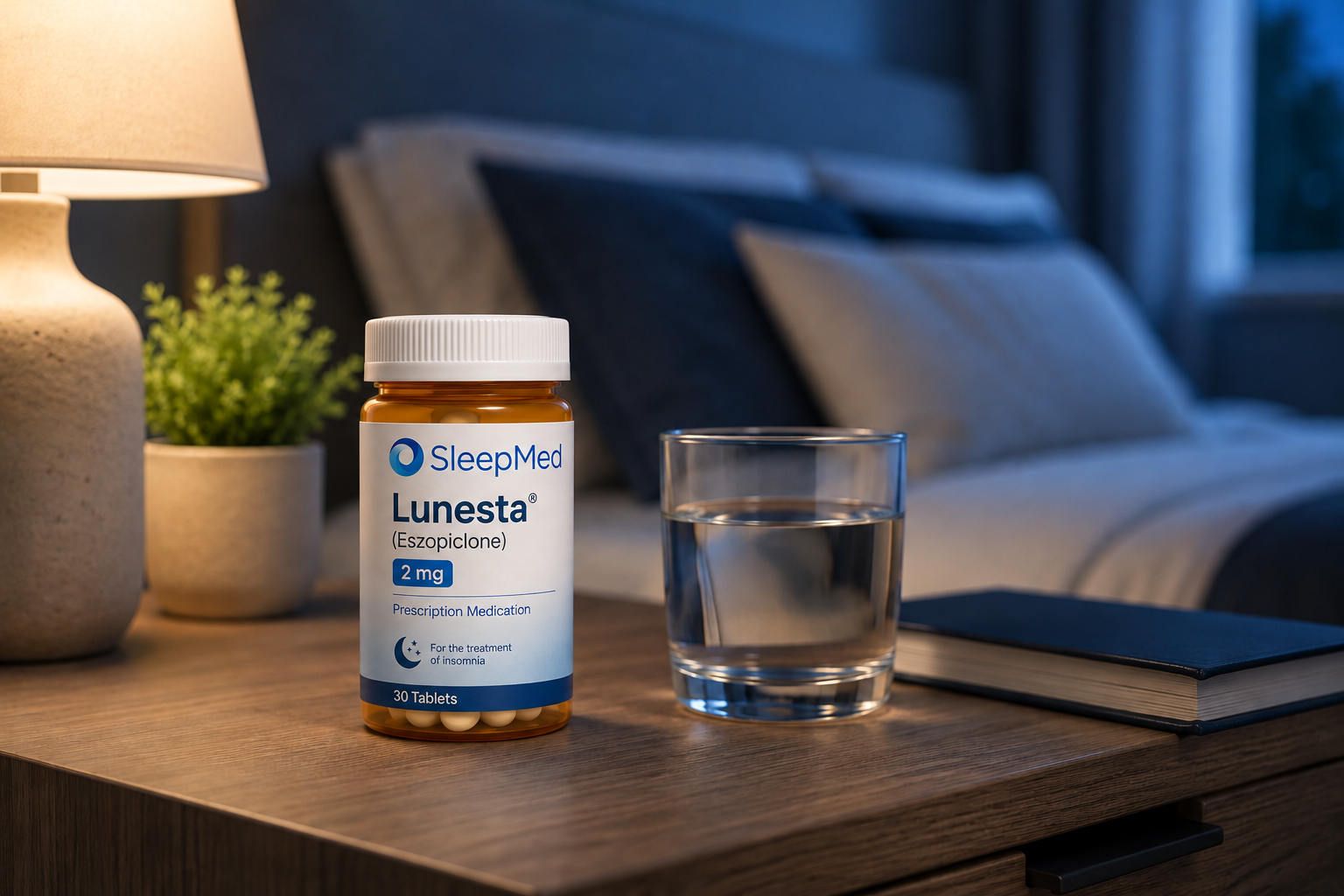
Lunesta is the brand name for eszopiclone, a prescription sedative-hypnotic medication approved by the U.S. Food and Drug Administration (FDA) for treating insomnia in adults.
Eszopiclone belongs to a class of sleep medications commonly called Z-drugs. Although chemically distinct from benzodiazepines, it acts through the GABA-A receptor system in the central nervous system, producing effects that promote sleep.
Lunesta is available in three tablet strengths: 1 mg, 2 mg, and 3 mg. It is classified as a Schedule IV controlled substance in the United States.
Clinical studies have demonstrated improvements in two important aspects of insomnia:
This dual effect is one of Lunesta's distinguishing clinical characteristics.
However, Lunesta treats insomnia symptoms. It does not correct underlying conditions such as obstructive sleep apnea or other medical problems that may contribute to disrupted sleep.
Why Lunesta May Be Considered for Insomnia
Insomnia is not one uniform experience. The pattern of symptoms can influence which treatment approaches are most appropriate.
Difficulty Falling Asleep
Some people spend prolonged periods awake after going to bed, even when they feel tired.
Lunesta may help shorten sleep latency, allowing sleep to begin more readily when a clinician determines that medication is appropriate.
However, difficulty falling asleep may also reflect irregular sleep schedules, behavioral patterns, circadian rhythm disorders, or other contributing factors.
Difficulty Staying Asleep
Other patients fall asleep without much difficulty but wake repeatedly or remain awake for extended periods during the night.
Lunesta has demonstrated benefits for sleep maintenance, including improvements in measures of nighttime wakefulness.
This may make it a treatment option worth discussing when sleep continuity is a significant concern.
Insomnia Affecting Daytime Functioning
Persistent insomnia can interfere with concentration, mood, productivity, and quality of life.
Effective treatment aims to improve nighttime sleep without introducing unacceptable next-day impairment.
That balance matters. A medication that helps someone sleep but leaves them insufficiently alert the following morning may not be the right treatment for that individual.
Buying Lunesta Online: Prescription Requirements and Safety
Patients searching for Lunesta online may be looking for a convenient way to discuss persistent insomnia, understand their treatment options, or obtain a prescription when clinically appropriate.
In the United States, Lunesta (eszopiclone) is a Schedule IV controlled substance. It cannot legally be dispensed by a legitimate U.S. pharmacy without a valid prescription from an authorized healthcare professional.
An online medical evaluation may be appropriate in certain circumstances, but the clinician must assess the patient's symptoms, medical history, current medications, and relevant safety concerns.
Can Lunesta Be Prescribed Through Telehealth?
Telehealth prescribing may be possible when clinically appropriate and permitted by applicable federal and state regulations.
Because eszopiclone is a controlled substance, additional prescribing requirements apply. Eligibility depends on current law, the clinician's licensure, and the circumstances of the evaluation.
A legitimate consultation should not promise automatic approval or guarantee access to a particular medication.
Choosing a Safe Online Pharmacy
Patients should avoid websites offering prescription-free Lunesta, unverifiable medication sources, or guaranteed prescriptions without a meaningful clinical evaluation.
A legitimate pharmacy should require a valid prescription, hold appropriate licensing, and provide access to a licensed pharmacist.
The FDA's BeSafeRx program provides practical guidance on recognizing potentially unsafe online pharmacies.
Lunesta Dosage & How It Is Taken
Lunesta should be taken exactly as prescribed. The appropriate dose depends on factors including age, medical conditions, other medications, and individual response.
For adults, the FDA-recommended starting dose is 1 mg once daily, immediately before bedtime.
If clinically appropriate, the prescribing clinician may increase the dose to 2 mg or 3 mg. The maximum recommended adult dose is 3 mg once daily.
For older or debilitated patients, the total dose should not exceed 2 mg daily. A maximum of 2 mg also applies to patients with severe hepatic impairment and those taking certain potent CYP3A4 inhibitors.
Lunesta should be taken only when at least 7–8 hours are available for sleep before the planned time of awakening.
Taking Lunesta With or Without Food
Lunesta may be taken with or without food, but taking it with or immediately after a heavy, high-fat meal can slow absorption and delay its sleep-onset effect.
Patients should follow their prescribed administration schedule and avoid changing the timing or dose without medical guidance.
Higher doses can increase the risk of next-day impairment. Taking more medication does not automatically produce better or more restorative sleep.
Patients should not repeat a dose during the night, increase their prescribed amount, or combine Lunesta with another sleep medication unless specifically instructed by their healthcare professional.
Important Safety: FDA Boxed Warning
Lunesta carries an FDA boxed warning for complex sleep behaviors.
These are activities performed while a person is not fully awake and may have little or no memory of what occurred.
Examples include sleepwalking, sleep-driving, preparing or eating food, and other potentially dangerous activities.
Serious injuries and deaths have occurred in association with these behaviors. They may happen at recommended doses, including in patients without a previous history of such events.
If a complex sleep behavior occurs, discontinue Lunesta immediately and contact a healthcare professional. Lunesta must not be used again by a patient who has experienced a complex sleep behavior after taking the medication.
Lunesta is also contraindicated in patients with known hypersensitivity to eszopiclone, including serious allergic reactions such as anaphylaxis or angioedema.
These warnings should be reviewed before treatment begins, not after an adverse event occurs.
The Night Doesn't End When the Tablet Wears Off
Falling asleep is important. Being able to function safely the following morning matters just as much.
Eszopiclone has an average elimination half-life of approximately six hours in healthy adults, but medication effects vary among individuals.
Residual sedation and psychomotor impairment can affect driving, concentration, coordination, judgment, and other activities requiring alertness.
The risk may be greater with higher doses, insufficient time in bed, interacting medications, or individual susceptibility.
The FDA prescribing information specifically warns that the 3 mg dose may impair next-day driving and other activities requiring full alertness, even when patients do not recognize that they are impaired.
Patients should follow their prescriber's instructions and avoid driving or hazardous activities when impairment may be present.
Possible Side Effects of Lunesta
Lunesta can cause adverse effects, and individual tolerability varies.
Commonly reported side effects include:
- Unpleasant or metallic taste
- Headache
- Dizziness
- Dry mouth
- Drowsiness
The unpleasant or metallic taste associated with eszopiclone is a particularly recognizable adverse effect and may influence whether a patient finds the medication tolerable.
More serious risks include complex sleep behaviors, next-day impairment, severe allergic reactions, abnormal thinking or behavior, and worsening depression.
Patients should seek emergency medical attention for symptoms of a serious allergic reaction, including swelling of the tongue or throat or difficulty breathing.
When Lunesta May Not Be Appropriate
Lunesta is not suitable for every patient experiencing insomnia.
A careful medical assessment is particularly important for people with a history of substance misuse, significant psychiatric symptoms, breathing disorders, liver disease, or medication-related impairment.
Patients who have previously experienced a complex sleep behavior after taking Lunesta must not take it again.
Alcohol and other central nervous system depressants can intensify sedation and impairment. Combining Lunesta with opioids, benzodiazepines, or other sedating medications may increase safety risks and requires careful clinical consideration.
Pregnancy, breastfeeding, advanced age, and medications that affect eszopiclone metabolism may also influence treatment decisions.
For patients who snore loudly, experience witnessed breathing pauses, or have substantial daytime sleepiness, evaluating possible obstructive sleep apnea may be important before selecting insomnia treatment.
Is Lunesta Appropriate for Long-Term Insomnia Treatment?
Lunesta has been evaluated in clinical studies lasting several months, including a six-month trial.
However, evidence of sustained effectiveness does not mean that indefinite treatment is appropriate for every patient.
Continued medication use should involve periodic reassessment of insomnia symptoms, treatment benefits, adverse effects, and the potential for misuse or dependence.
Dependence, withdrawal symptoms, and rebound insomnia are possible considerations, particularly after sustained use.
Patients taking Lunesta regularly should discuss any plan to discontinue or change treatment with their prescriber rather than making abrupt changes independently.
Medication Isn't the Only Insomnia Treatment
Why CBT-I Matters
Cognitive behavioral therapy for insomnia (CBT-I) is a structured, evidence-based treatment that addresses the thoughts, behaviors, and sleep patterns contributing to persistent insomnia.
It may include stimulus control, sleep scheduling strategies, cognitive techniques, and other behavioral interventions.
For adults with chronic insomnia, multicomponent CBT-I is strongly recommended by the American Academy of Sleep Medicine.
Unlike medication, CBT-I aims to produce durable changes in the mechanisms that perpetuate insomnia.
Medication may still be considered when clinically appropriate, including when CBT-I is unavailable, insufficient, or part of a broader treatment plan.
The appropriate choice depends on the patient's symptoms, preferences, previous treatment, and clinical circumstances.
Insomnia treatment should not be reduced to a choice between taking a pill and doing nothing.
Lunesta vs. Ambien: Which Sleep Problem Are You Treating?
Lunesta (eszopiclone) and Ambien (zolpidem) are both prescription sedative-hypnotic medications commonly referred to as Z-drugs.
However, their clinical profiles are not identical.
Immediate-release Ambien is FDA-approved for the short-term treatment of insomnia characterized by difficulty initiating sleep. Lunesta has demonstrated benefits for both sleep initiation and sleep maintenance.
Eszopiclone also has a longer average elimination half-life than immediate-release zolpidem, which may influence the duration of medication exposure and next-day effects.
An unpleasant or metallic taste is a recognized side effect of Lunesta, while zolpidem has different pharmacokinetic and dosing considerations.
Both medications carry FDA boxed warnings for complex sleep behaviors. Both can cause next-day impairment and have potential for misuse or dependence.
Neither medication is universally safer or more effective for every patient.
Treatment selection depends on the patient's insomnia pattern, age, medical history, other medications, previous treatment response, and individual tolerability.
For more information, explore Ambien (zolpidem) online treatment and prescription information.

When Insomnia May Point to Another Sleep Disorder
Difficulty sleeping does not always mean that insomnia is the only problem.
Some people experience repeated awakenings because of obstructive sleep apnea. Others may have restless legs syndrome, circadian rhythm disturbances, medication-related symptoms, or other medical conditions that interfere with sleep.
These distinctions matter because a sleep medication may reduce awareness of nighttime wakefulness without correcting the underlying cause.
Do You Need a Sleep Study?
A sleep study is not routinely required to diagnose uncomplicated chronic insomnia.
However, diagnostic testing may be appropriate when symptoms suggest obstructive sleep apnea, certain movement disorders, or another sleep condition requiring objective assessment.
SleepMed's experience with sleep studies and broader sleep diagnostic services reflects the importance of identifying sleep disorders accurately.
Sleep Medicine Experience Behind Your Care
SleepMed brings more than 25 years of experience in sleep diagnostics, therapy support, and related sleep medicine services.
Its broader operations include sleep testing, sleep laboratory services, PAP therapy support, and clinical research involving sleep disorders.
SleepMed has reported approximately 240,000 diagnostic sleep studies annually, relationships with more than 22,000 physicians and dentists, and a network of approximately 120 sleep facilities.
These organizational figures reflect SleepMed's broader sleep medicine activities. They are not measures of Lunesta treatment outcomes, prescriptions, or online medication consultations.
This distinction is important: experience in diagnosing and managing sleep disorders supports credible patient education, but it should not be presented as evidence that a particular medication is appropriate for every patient.
Finding the Right Treatment Path
An effective insomnia treatment plan begins by identifying the pattern of sleep difficulty and the factors that may be contributing to it.
For some patients, CBT-I or other non-medication strategies may be the most appropriate starting point. For others, a clinician may consider prescription treatment, including Lunesta, after weighing expected benefits against potential risks.
When symptoms suggest another sleep disorder, further diagnostic evaluation may be necessary.
Lunesta is one option within a larger field of insomnia treatments—not a substitute for understanding the patient's sleep health.
Explore SleepMed's sleep treatment pathways to learn more about the available approaches.
Frequently Asked Questions About Lunesta (Eszopiclone)
Yes. Lunesta is a brand name for eszopiclone. FDA-approved generic eszopiclone products contain the same active ingredient and must meet applicable regulatory standards for quality and bioequivalence.
Lunesta is taken immediately before bedtime. Peak blood concentrations generally occur approximately one hour after administration in healthy adults. Individual responses vary, and taking it with a heavy, high-fat meal may delay its sleep-onset effect.
Eszopiclone has an average elimination half-life of approximately six hours in healthy adults. Elimination may take longer in some patients, and residual effects can impair alertness the following morning.
Lunesta is intended to be taken immediately before bedtime, not as an additional middle-of-the-night dose. Taking it later may leave insufficient time for its effects to wear off. Do not repeat a dose during the same night.
An unpleasant or metallic taste, known as dysgeusia, is a recognized side effect of eszopiclone. It is usually not dangerous, but patients should discuss persistent or bothersome symptoms with their healthcare professional.
Yes. Lunesta carries an FDA boxed warning for complex sleep behaviors, including sleepwalking and sleep-driving. Serious injuries and deaths have occurred. If such a behavior occurs, discontinue Lunesta immediately and contact a healthcare professional. The medication must not be used again after a Lunesta-associated complex sleep behavior.
Yes. Eszopiclone is a Schedule IV controlled substance with potential for misuse and dependence. Withdrawal symptoms or rebound insomnia may occur when treatment is discontinued. Patients should discuss changes to ongoing medication use with their prescriber.
Lunesta has demonstrated benefits for both sleep onset and maintenance, whereas immediate-release Ambien is primarily indicated for difficulty initiating sleep. However, this does not establish that Lunesta is universally better. The appropriate medication depends on the patient's symptoms, medical history, and treatment response.
Lunesta has been studied in patients with chronic insomnia, including trials lasting several months. Continued use requires individualized assessment and periodic review of benefits, adverse effects, and dependence-related risks.
For chronic insomnia, multicomponent CBT-I is generally recommended as an initial treatment. Prescription medication may be appropriate in selected circumstances, depending on symptom severity, treatment availability, previous response, and clinical judgment.
Not necessarily. Insomnia is usually evaluated through clinical history and sleep patterns. A sleep study may be recommended when symptoms suggest obstructive sleep apnea or another sleep disorder. Learn more about SleepMed's sleep studies.
No. In the United States, Lunesta requires a valid prescription. Websites offering eszopiclone without a prescription may sell counterfeit or unsafe products. Patients should use appropriately licensed pharmacies and follow the FDA's online pharmacy safety guidance.
An appropriately licensed healthcare professional may prescribe Lunesta through telehealth when clinically appropriate and permitted under applicable federal and state regulations. The evaluation should consider insomnia symptoms, medical history, previous treatment, and medication-related risks.
Medical Review & Editorial Standards
This educational resource was developed using FDA-approved prescribing information, established clinical guidelines, and published research on insomnia treatment.
SleepMed's experience in sleep diagnostics and therapy informs its broader educational approach to understanding sleep disorders and available treatment options.

Board Certified in Sleep Medicine, Pulmonary Medicine & Internal Medicine
This information is intended for educational purposes and does not replace individualized medical advice, diagnosis, or treatment. Prescription decisions must be made by an appropriately licensed healthcare professional.
Medical References
DailyMed
Clinical pharmacology, indications and usage, adverse reactions, dosage and administration, medication guide.
U.S. Food and Drug Administration (FDA)
Official FDA prescribing information covering indications, dosage, contraindications, boxed warnings, precautions, adverse reactions, drug interactions, and safe use.
Considering an online pharmacy? Have you or someone you know thought about buying prescription medicine online?
American Academy of Sleep Medicine (AASM)
This guideline establishes clinical practice recommendations for the use of behavioral and psychological treatments for chronic insomnia disorder in adults.
The purpose of this guideline is to establish clinical practice recommendations for the pharmacologic treatment of chronic insomnia in adults, when such treatment is clinically indicated.
U.S. Department of Health & Human Services (HHS)
Current federal information regarding controlled-medication prescribing through telemedicine.
SleepMed
Explore SleepMed's sleep treatment pathways to learn more about the available approaches.
At SleepMed, we are unique in that we manufacture our own proprietary device for Home Sleep Testing- the ARES™

Ready to Understand Your Sleep?
Insomnia can involve difficulty falling asleep, staying asleep, or both. Lunesta may be one treatment option, but choosing an appropriate approach requires understanding the symptoms, potential causes, and individual safety considerations.
SleepMed's sleep medicine resources can help patients explore diagnostic pathways, treatment approaches, and questions to discuss with qualified healthcare professionals.
Prescription medications are prescribed only when a licensed healthcare provider determines that treatment is clinically appropriate following an individualized medical evaluation. Eligibility for telehealth care and prescribing depends on the patient's location, provider licensure and authorization, and applicable federal and state regulations. Lunesta (eszopiclone) is a Schedule IV controlled substance, and completing an online assessment or consultation does not guarantee that Lunesta—or any other prescription medication—will be prescribed.
The information on this page is intended for general educational purposes and does not replace personalized medical advice, diagnosis, or treatment from a qualified healthcare professional.